At six in the morning, four places are open and none of them has a door
Of the 110 Berlin places in this corpus with recorded opening hours, exactly four are open at 06:00. The same four, on all seven days. A square, two parks and a brewery courtyard. What that says about Berlin is less interesting than what it says about the guide.
Berlin's week has one hour that never moves. Every other hour of every other day rises and falls: the lunch peak, the six o'clock handover, the Monday dip. At 06:00 the count is four, and it is four on Sunday, four on Wednesday, four on Saturday, four on every day of the year this data describes.
The four are the same four every time. Helmholtzplatz, Mauerpark, the Kulturbrauerei courtyard and the Volkspark am Weinberg. A square, two parks and the open ground between a set of old brewery buildings. Not one of them has a door, which is why OpenStreetMap tags them as open around the clock: there is nothing there to shut.
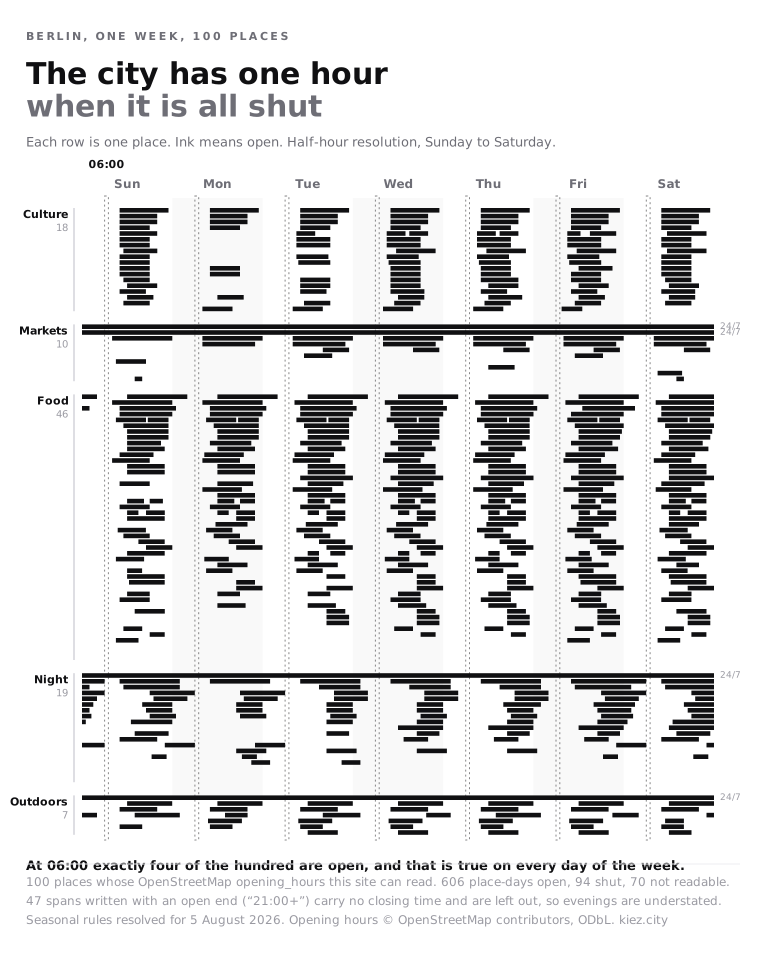
One week, one row per place, one column per half hour. Full size.
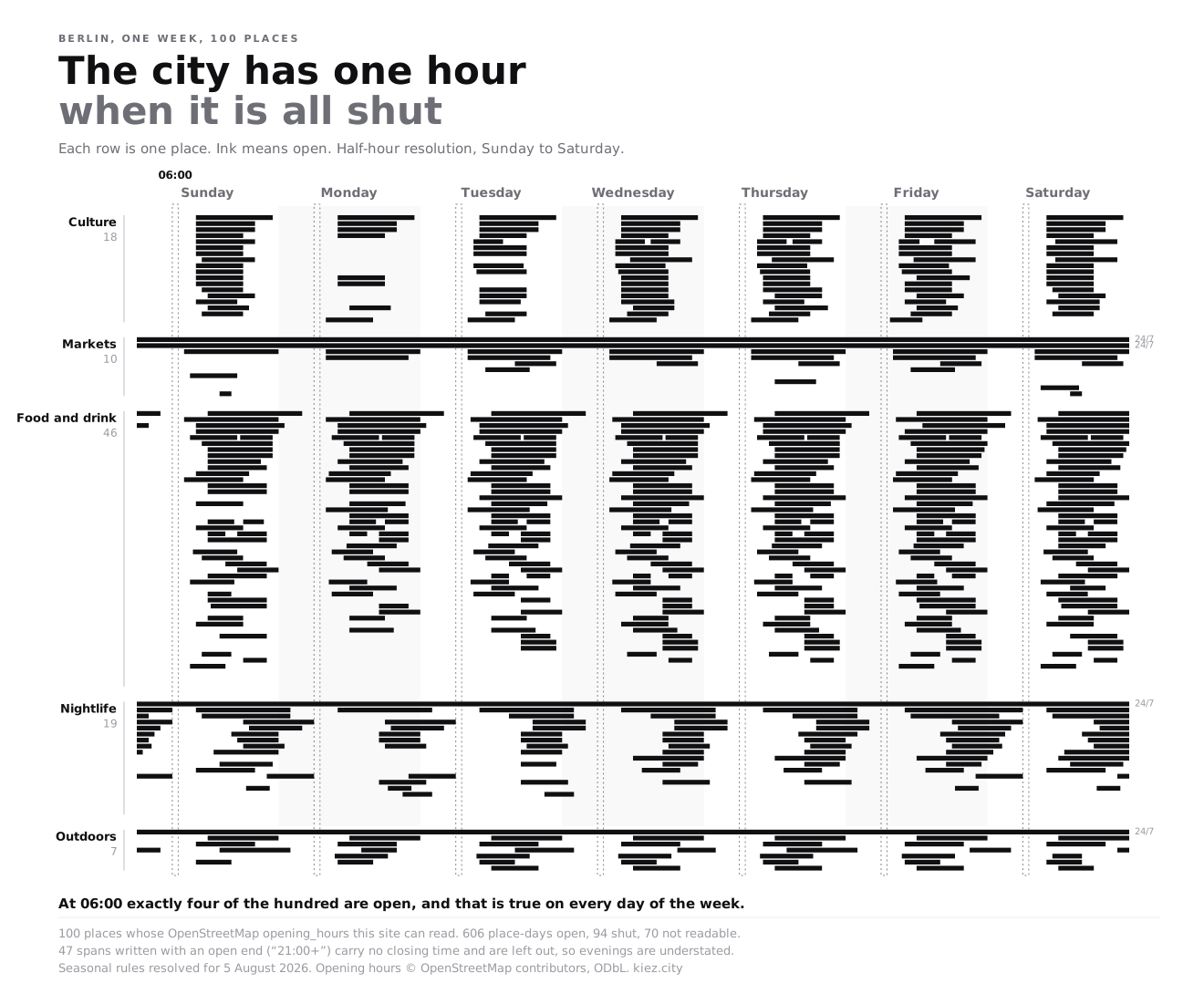
The narrowest part of the week
Drawing the same data as a single spiral, one turn per day, makes the pinch easier to see than any grid does. Each turn thickens where more places are open and thins where fewer are. Every turn narrows in the same place.
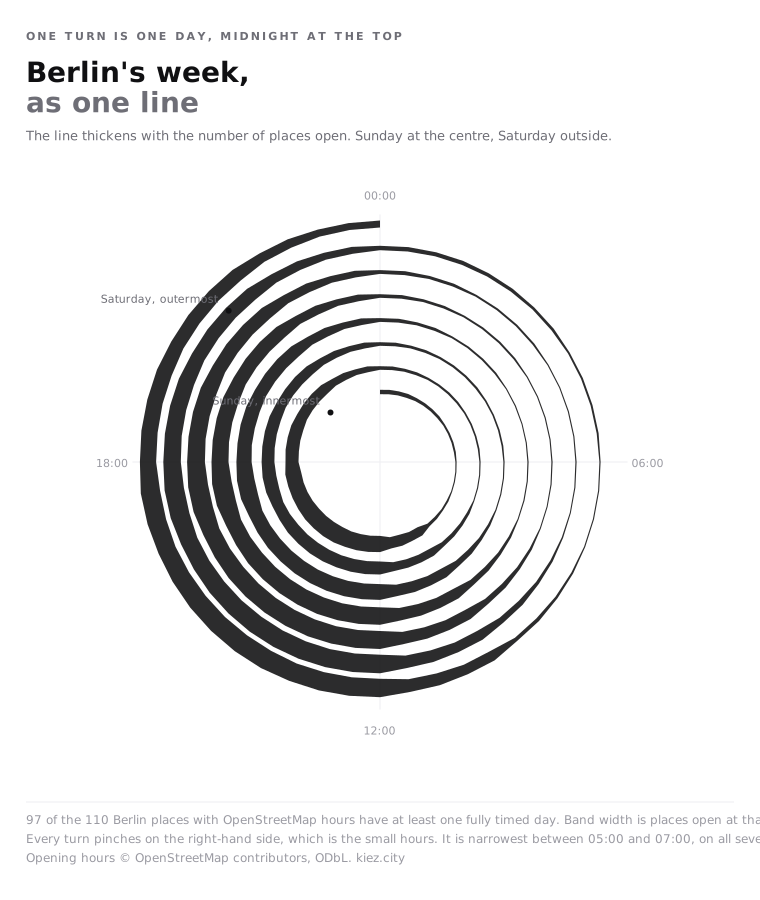
Seven turns, midnight at the top. Sunday innermost, Saturday outermost. Full size.
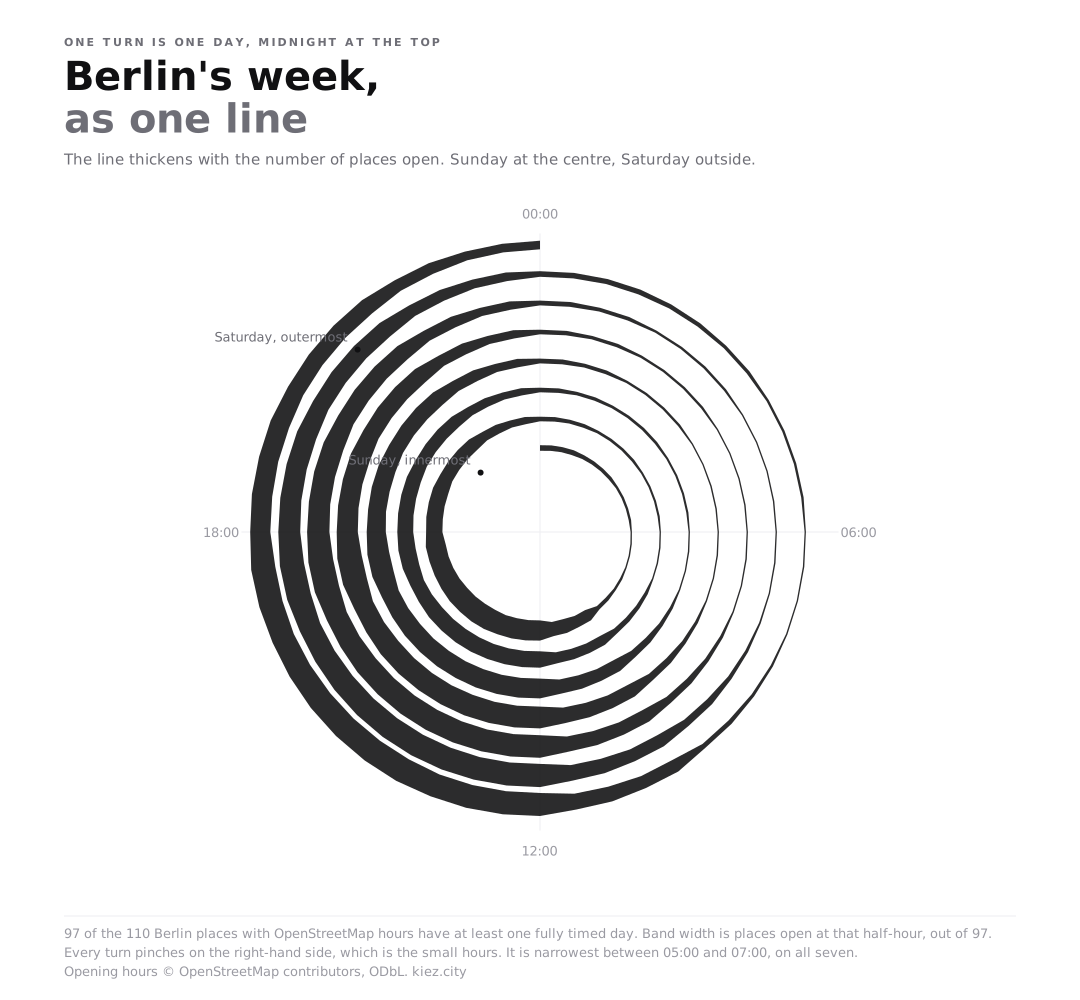
The pinch is between 05:00 and 07:00 on all seven turns. Berlin's night runs late enough that a Saturday turn is still thick at four in the morning, and the gap between the last club and the first bakery is about two hours wide.
The first real opening in the corpus is at 07:30, and only one place-day has it. By 08:00 there are 26 place-days open, and by 10:00 there are 123. On a Wednesday at eight the whole sample amounts to nine places: the four pieces of ground, plus the Arminiusmarkthalle, a coffee roaster in Schöneberg, a bakery in Neukölln, a spa in Moabit, and the Jewish cemetery on Schönhauser Allee.
The day the city is smallest
Set the same counts side by side by day and the ranking is not the one you would guess.
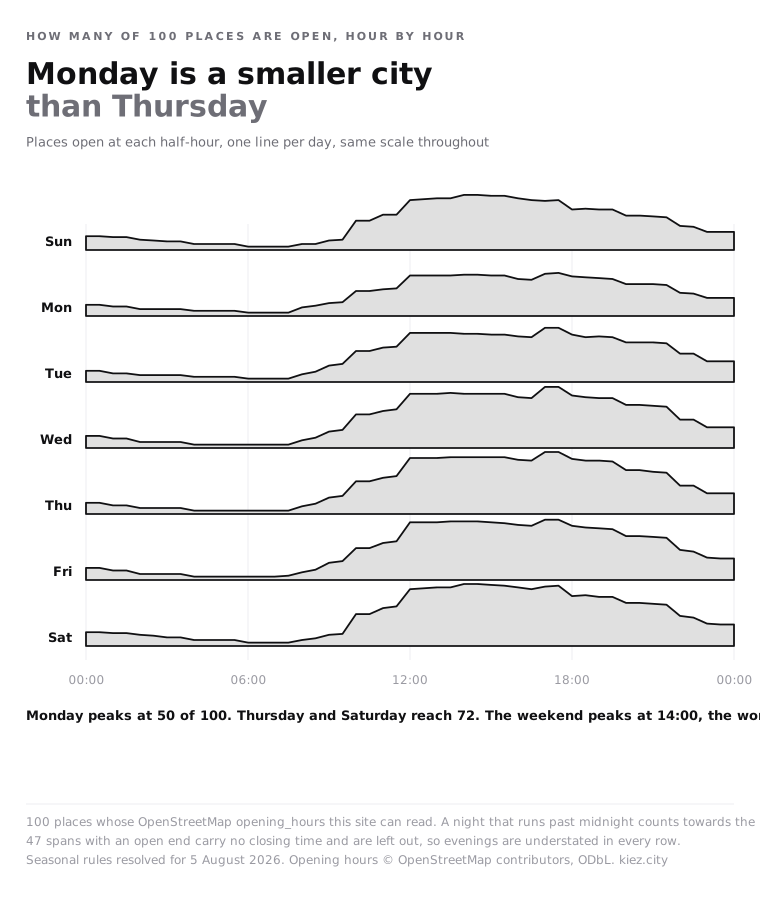
Places open at each hour, one ridge per day. Full size.
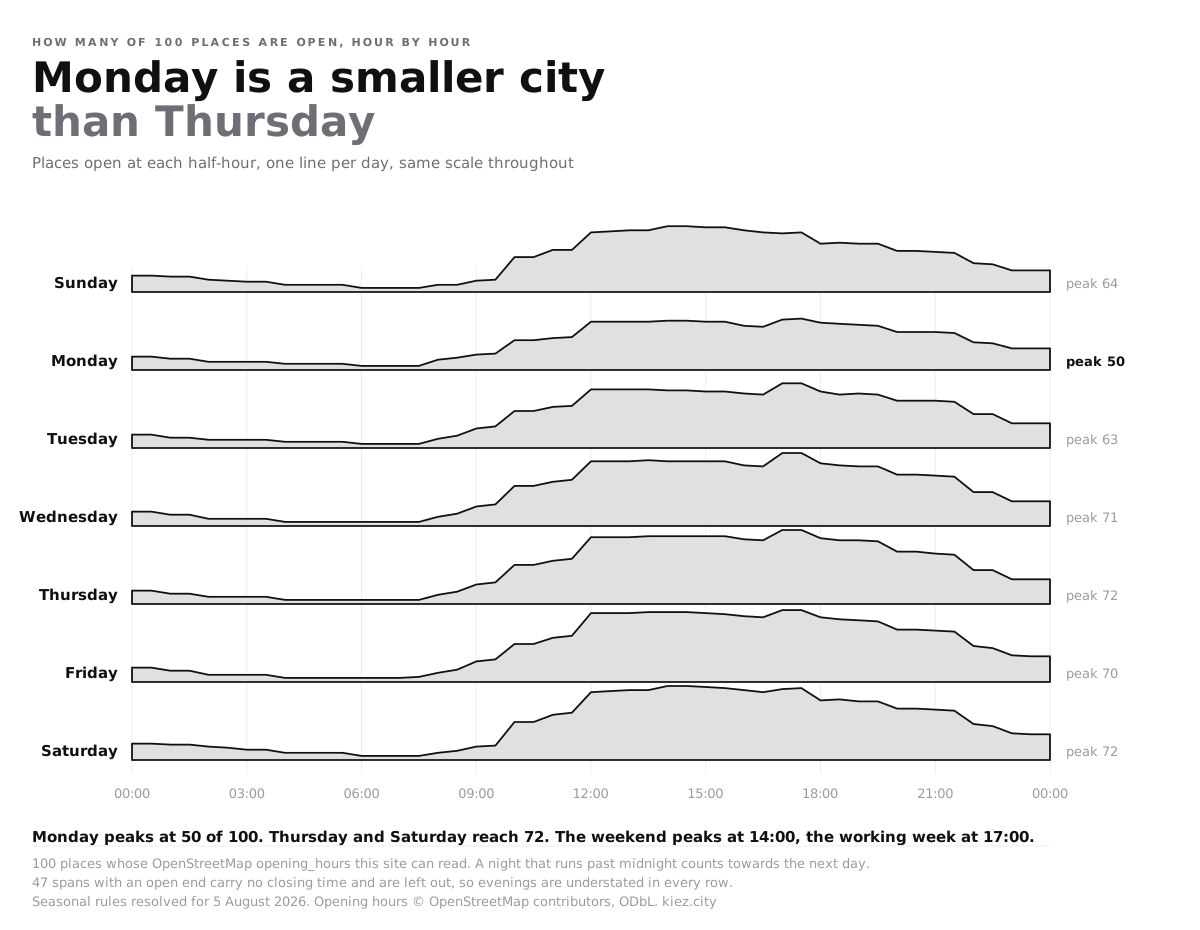
Monday peaks at 50 places open. Thursday and Saturday both reach 72. Wednesday gets to 71 and Friday to 70, so the working week is essentially flat from Wednesday onward and Monday sits 30% below it.
The weekend and the working week also peak at different hours. Saturday and Sunday top out at 14:00, in the middle of the afternoon. Tuesday through Friday top out at 17:00, in the hour before the museums shut. Those are two different cities using the same buildings.
Why the morning is empty here and not in Berlin
This is a corpus of restaurants, clubs, museums, markets and parks, assembled to plan a day out. It contains two bakeries. Berlin has thousands of bakeries, and a great many of them are open at six, along with the Spätis, the gyms, the swimming pools and every U-Bahn platform in the city.
So the flat line at 06:00 is a portrait of a blind spot rather than of a sleeping city. A guide built around evenings has nothing to say about mornings, and the chart is honest enough to show it as an empty band rather than hide it in an average.
Three of the four places open at six are in Prenzlauer Berg, which is one of only two areas this research took to full depth. That is a second artefact sitting on top of the first. If the same research had gone properly through Wedding or Moabit, the six o'clock count would be higher, and the reason would be coverage rather than Berlin.
The counting rules
The grid and the ridgeline draw 110 places that carry an opening-hours string, of which 100 have at least one day the parser can read. That is 606 place-days open, 94 shut, and 70 unreadable, and the 70 are ten places whose hours cannot be read on any day at all. Several of those are clubs whose hours are genuinely per-event, which is a real answer and an unusable one.
A night that runs past midnight is counted into the morning it ends in, because
that is where the person is. Ten places write at least one span with no closing
time, in the form 21:00+, and those spans are dropped rather than guessed, so
the late evening is understated throughout.
Hours come from OpenStreetMap, under the ODbL. Where a second source disagrees we keep both instead of picking a winner, and the disagreement gets reported on the day it matters. The reason for that is dull and important: a wrong opening time parses cleanly, renders neatly, and schedules happily. Nothing downstream can tell 05:30 from 17:30 unless two sources are made to argue about it.