Five web pages are the only source for a third of this Berlin guide
We counted the evidence behind our own 221 Berlin places. Every record rests on exactly one source. Five borough index pages on berlin.de carry 76 of them, and none of the 116 sources has a recorded publication date.
Every place record in this project cites exactly one source. Not a minimum of one. Exactly one, across all 221 records, with no second reference anywhere to disagree with the first.
We counted what those 221 citations actually point at. The result is worth publishing, because a guide claiming that a person checked it should be able to show you what they checked.
116 URLs, and five of them do the heavy lifting
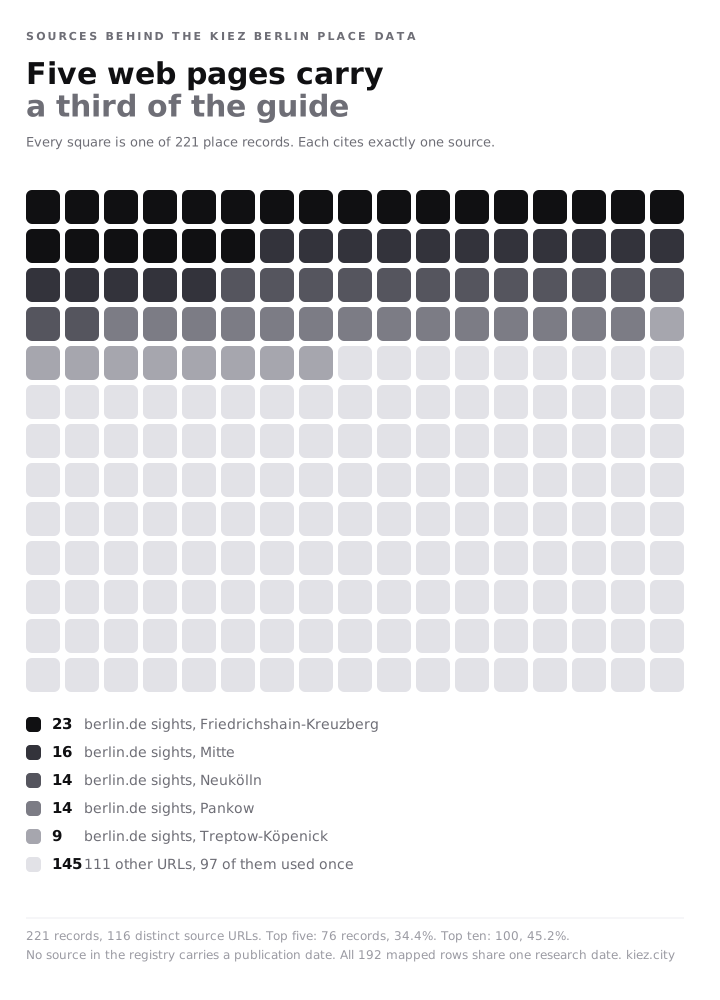
Records per source URL, ranked. Full size.
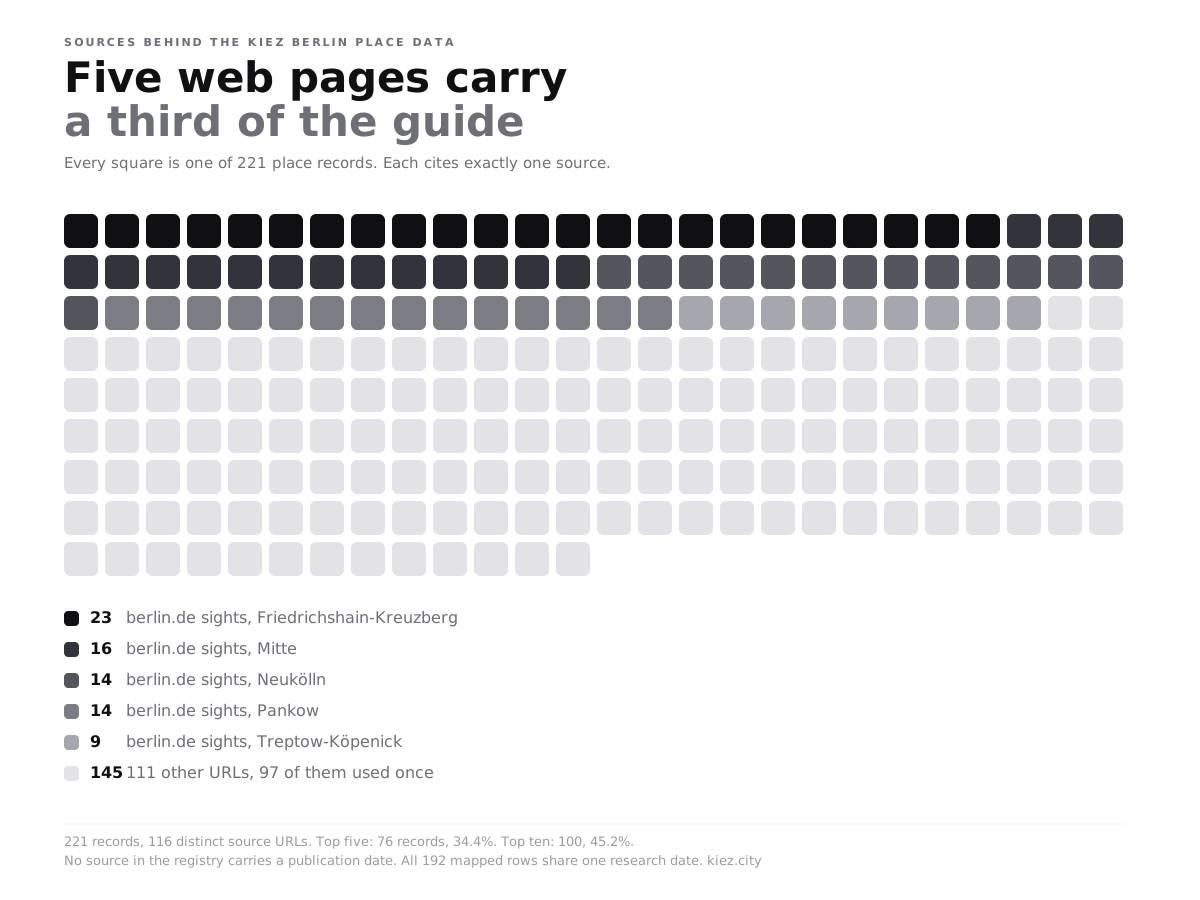
The 221 records use 116 distinct URLs. The distribution is steep:
| Source | Records | Share of 221 |
|---|---|---|
| berlin.de sights, Friedrichshain-Kreuzberg | 23 | 10.4% |
| berlin.de sights, Mitte | 16 | 7.2% |
| berlin.de sights, Pankow | 14 | 6.3% |
| berlin.de sights, Neukölln | 14 | 6.3% |
| berlin.de sights, Treptow-Köpenick | 9 | 4.1% |
| Top five combined | 76 | 34.4% |
| Top ten combined | 100 | 45.2% |
All five are the same kind of page: the city's own index of sights for one borough. One of them is the sole evidence for 23 places, from the East Side Gallery to Markthalle Neun to the Jewish Museum.
An index page is decent evidence for a narrow claim. It tells you a place exists, roughly where it is, and that the city considers it worth listing. It says nothing about whether the place opened this morning, whether the price on our page is current, or whether the door is where the map thinks it is.
The other end of the distribution is healthier than the top. Ninety-seven of the 116 URLs are used exactly once, which means most places do have their own individual source and the concentration lives entirely in the head of the curve.
By publisher, the 221 records break down as 135 from official sources, 36 from city press, 35 from listicles, 11 from local press, and 4 from Reddit threads.
None of the 116 has a date
Every source in the registry stores its publication date as UNDATED. We know
when the research run recorded each place, because all 192 mapped rows carry one
date, 2 August 2026. We do not know when the page they were read from was
written.
That single date is worth reading twice. It covers the 53 places whose status was checked as well as the 139 that were not, so the checking was one run rather than 53 separate visits.
The gap matters most where it is easiest to miss. A borough index page has no visible byline or timestamp, looks maintained, and may last have been touched in 2019.
The pages that do have depth
Fifty-three places have a full written page, and those carry their own citations, at a density the place records do not come close to.
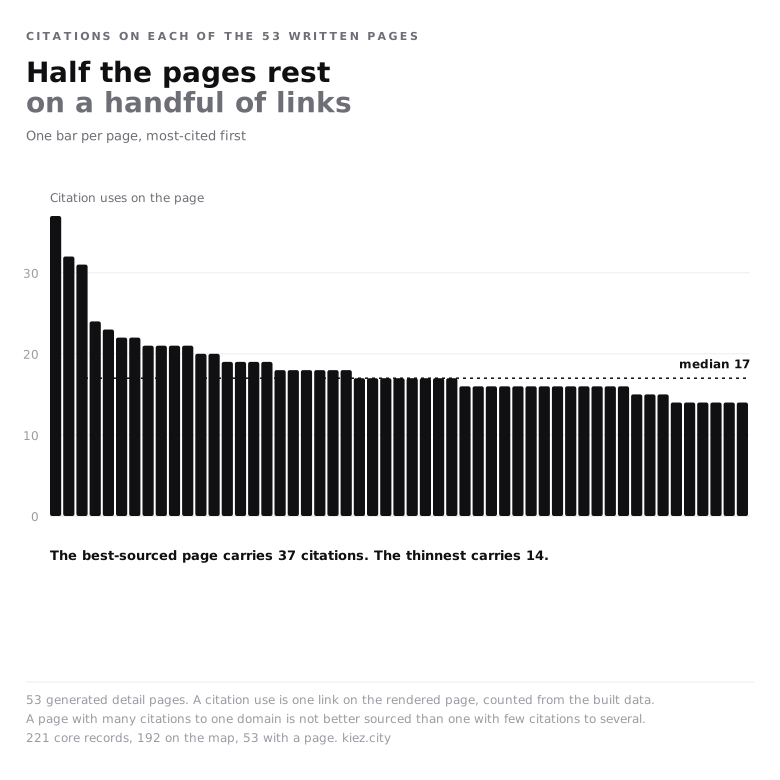
Citations on each of the 53 written pages. Full size.
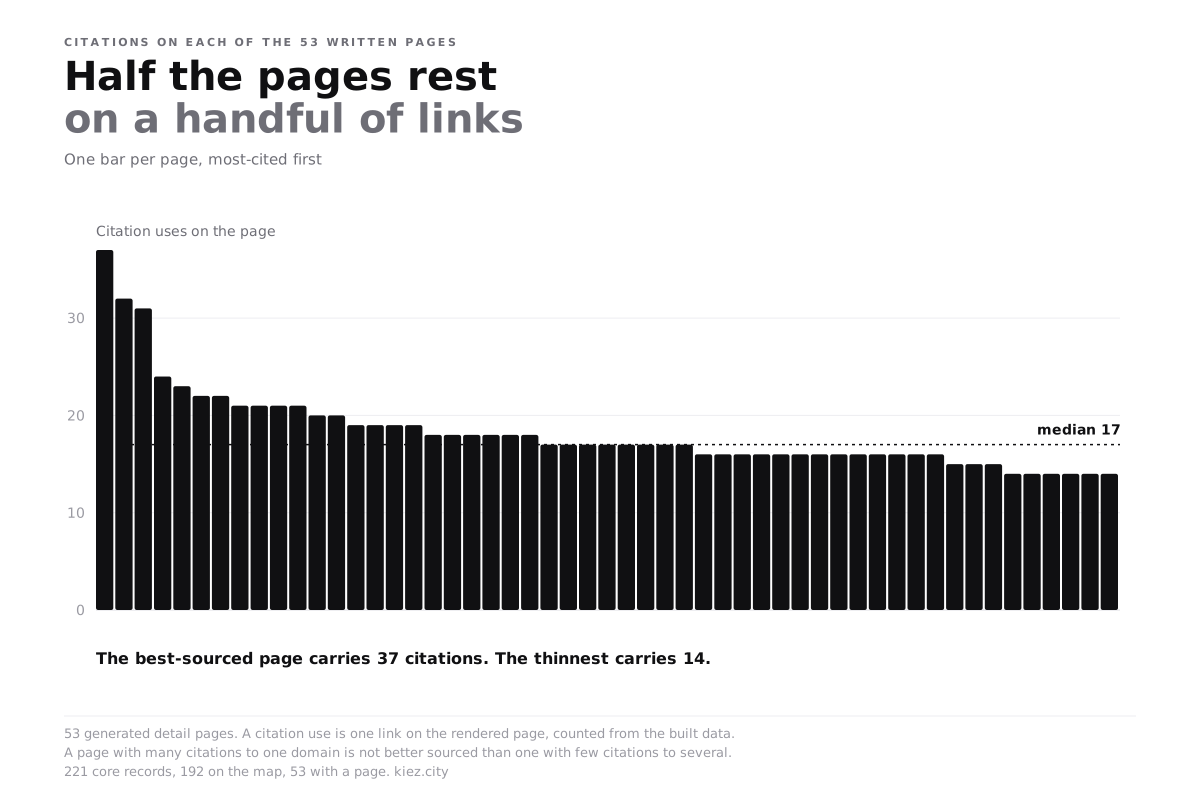
The best-sourced page carries 37 citations. The thinnest carries 14. That is a narrow range and a high floor, which is the one part of this audit that comes out well.
It should be read with a caution the chart carries in its own footer: a page with many citations to one domain is not better sourced than a page with fewer citations to several. Counting links measures effort, not independence.
139 of 192 places are unverified, and say so
The map carries 192 places. Of those, 53 have a research card and a status of open, checked on a stated date. The other 139 are marked unverified.
Unverified is not a soft version of open. It means the place was recorded from a
source mention and never confirmed since. On the pages that do carry a research
card, 122 individual claims are marked UNVERIFIED, spread across 52 of the 53
pages. Exactly one page has none.
All 53 sit in Neukölln and Prenzlauer Berg. The other fourteen research areas have no detail page at all, which is a coverage problem we are not going to solve by writing fourteen thin ones.
What fell off the map
The corpus holds 221 records and the map shows 192. The 29 that dropped out:
- 43 records had no coordinates after the research run. Geocoding by name recovered 19. The remaining 24 are not on the map, and were not given estimated positions, because a guessed pin is worse than no pin.
- 5 records were closed or moved and are excluded on purpose.
Why publish this
A number on a travel page and a number backed by something look identical. The only way a reader can tell them apart is if the working is visible on the page, and the only way that is credible is if the thin parts are visible too.
So: a third of this guide rests on five pages, none of our sources has a date, and three quarters of the map is unverified. Those are the three things we are fixing first, in that order.
If you spot a place we have wrong, the fastest correction is the one that names the place and says what changed.