Berlin's transit is two minutes slower inside a neighbourhood than between two
Across 3,570 measured BVG and VBB journeys, a trip that stays inside one Berlin area takes about two minutes longer than a trip of the same straight-line distance that crosses between two areas. The gap holds in every distance band we can test.
Fit the obvious model to Berlin's transit times and it behaves. Longer journeys take longer. What the model does not predict is that where you are matters as much as how far you are going.
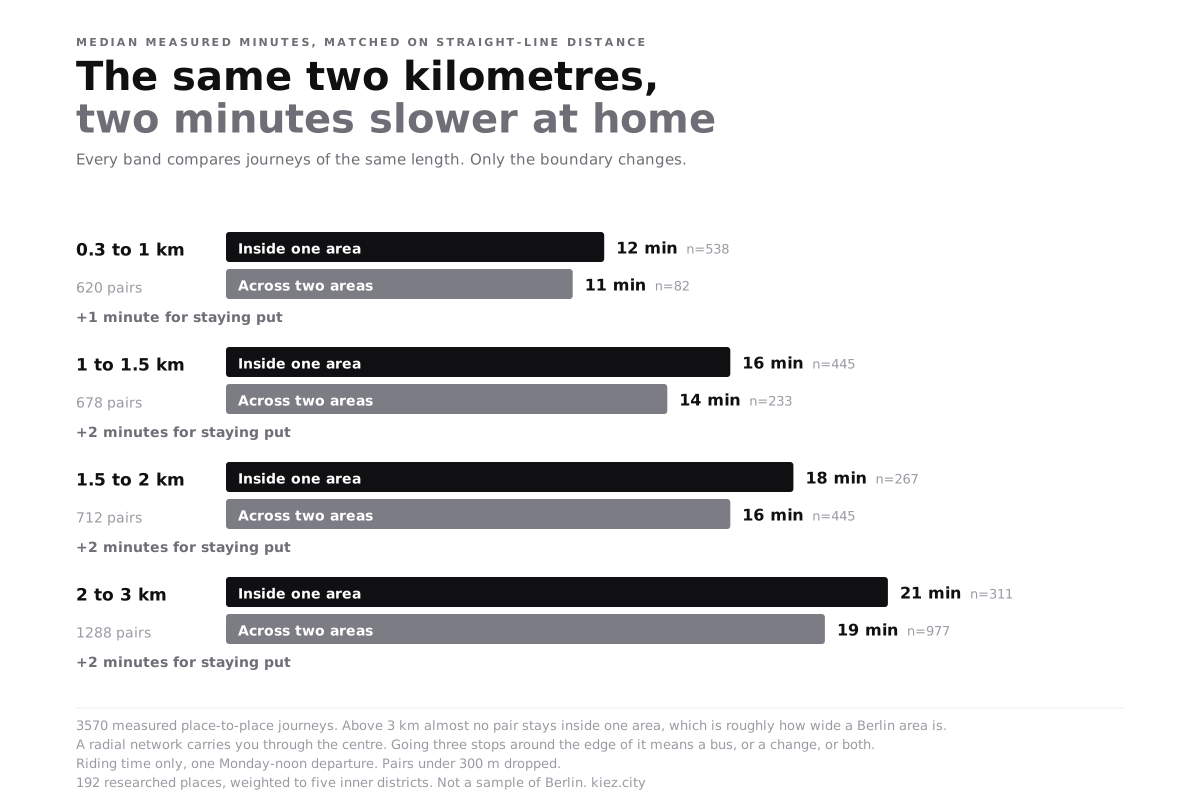
Take every measured journey between 0.3 and 1 kilometre. If it stays inside one research area, the median is 12 minutes. If it crosses from one area into another, 11. Move up a band and the gap widens to two minutes, and it stays at two for every band above that.
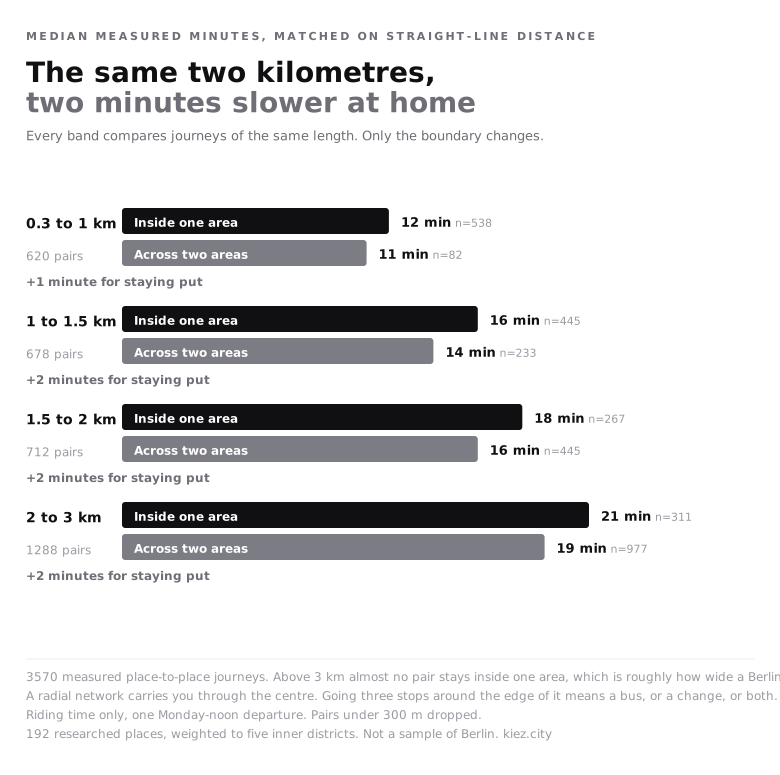
Median measured minutes, matched on straight-line distance. Full size.
Why the comparison is built this way
The naive version of this finding is wrong, and it is worth saying how.
Start by grouping journeys by area and you get an artefact. Journeys inside one area are shorter, and every transit journey pays a fixed cost before it covers any distance at all: walking is excluded here, but you still wait, and you still ride the slow first stretch out of wherever you started. A short journey pays that cost over fewer kilometres. Comparing a 1.4 km median against a 2.1 km median tells you about distance, not about geography.
So the chart above matches on distance first. Inside a band, both groups are the same length. The only thing that changes is whether the journey crosses a boundary. On that comparison the gap survives, in every band with enough pairs to measure: plus one minute under a kilometre, plus two above it.
Above three kilometres the comparison runs out, and that is informative on its own. There are 129 measured pairs between 3 and 4 kilometres that stay inside one area, and three that cross between two. Berlin's research areas are roughly three kilometres across, so past that distance almost every journey is a crossing by definition.
Kreuzberg, which is the case people already argue about
The same effect turns up in the crudest possible cut of the data, which is a matrix of every area against every other.
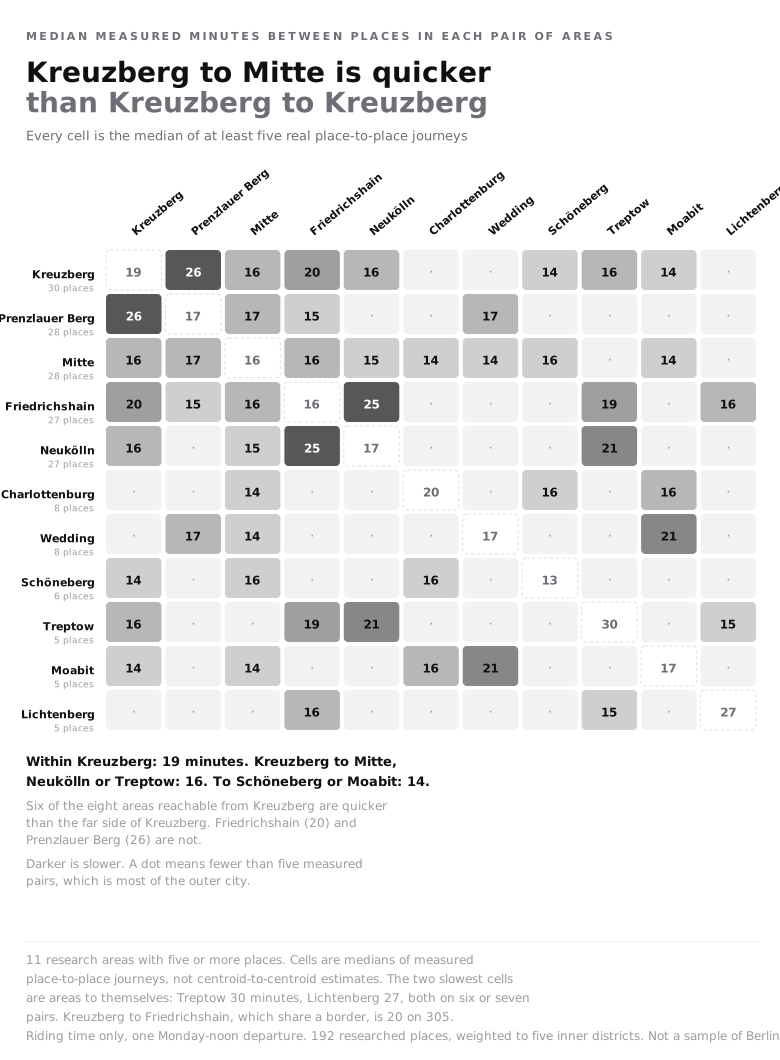
Median minutes between places in each pair of areas. Darker is slower. Full size.
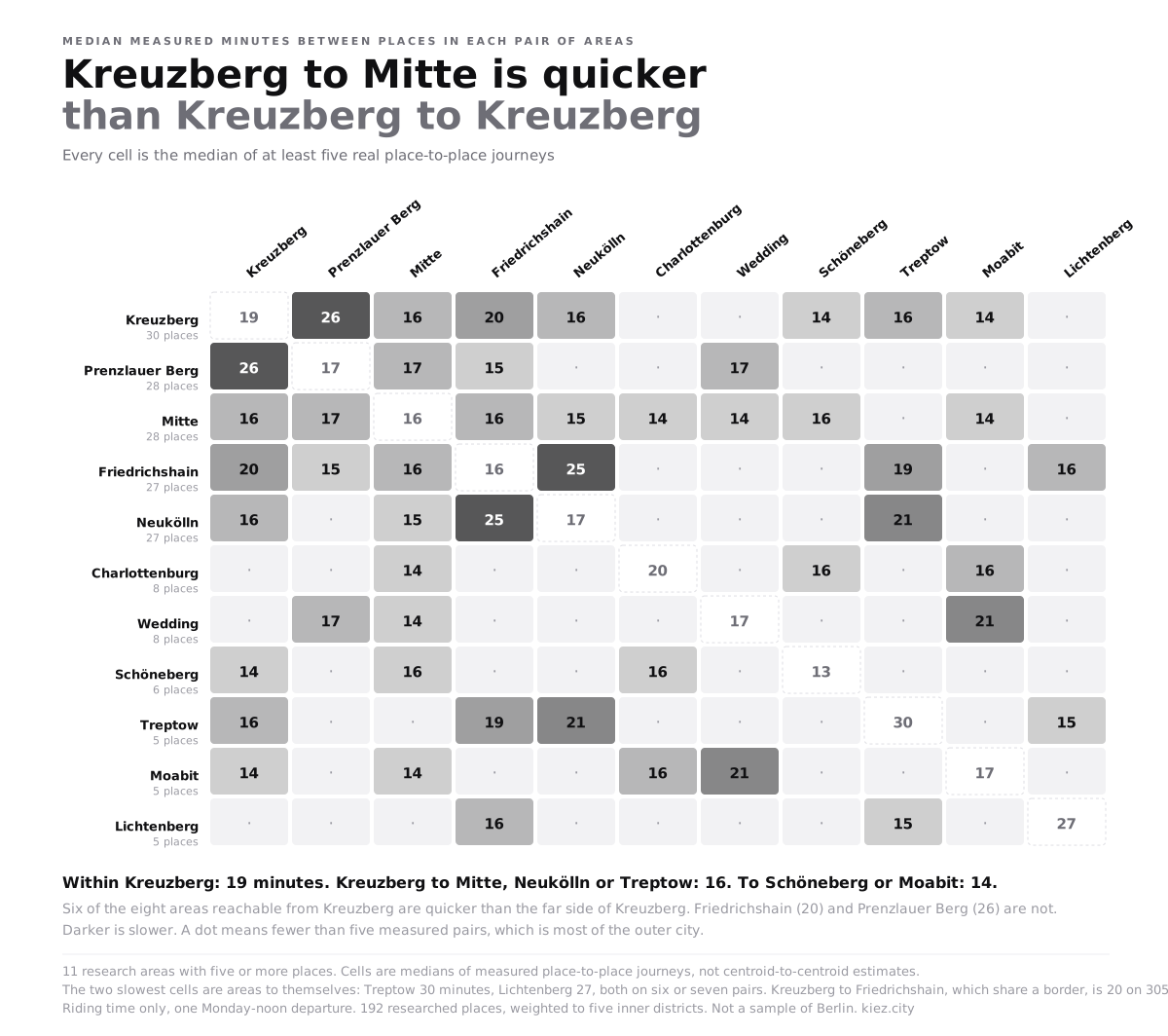
The median measured journey from one Kreuzberg place to another Kreuzberg place is 19 minutes, over 422 pairs. From Kreuzberg to Mitte it is 16, over 195. To Neukölln, 16. To Schöneberg, 14. Six of the eight areas we can reach from Kreuzberg with at least five measured pairs are quicker than the far side of Kreuzberg itself.
Two are not, and they are the ones that make the pattern make sense. Friedrichshain is 20 minutes and Prenzlauer Berg is 26. Kreuzberg and Friedrichshain share a border and a district administration; they also sit on opposite banks of the Spree with a limited number of ways across. Prenzlauer Berg is a diagonal, north-east across the whole inner city, and the network has no diagonal to offer.
Restrict the comparison to Kreuzberg and hold distance fixed and the gap gets larger. Between two and three kilometres, a journey inside Kreuzberg has a median of 21.5 minutes across 110 pairs. A journey of the same length that leaves Kreuzberg has a median of 18, across 467.
Seventeen pairs where the map lies to you
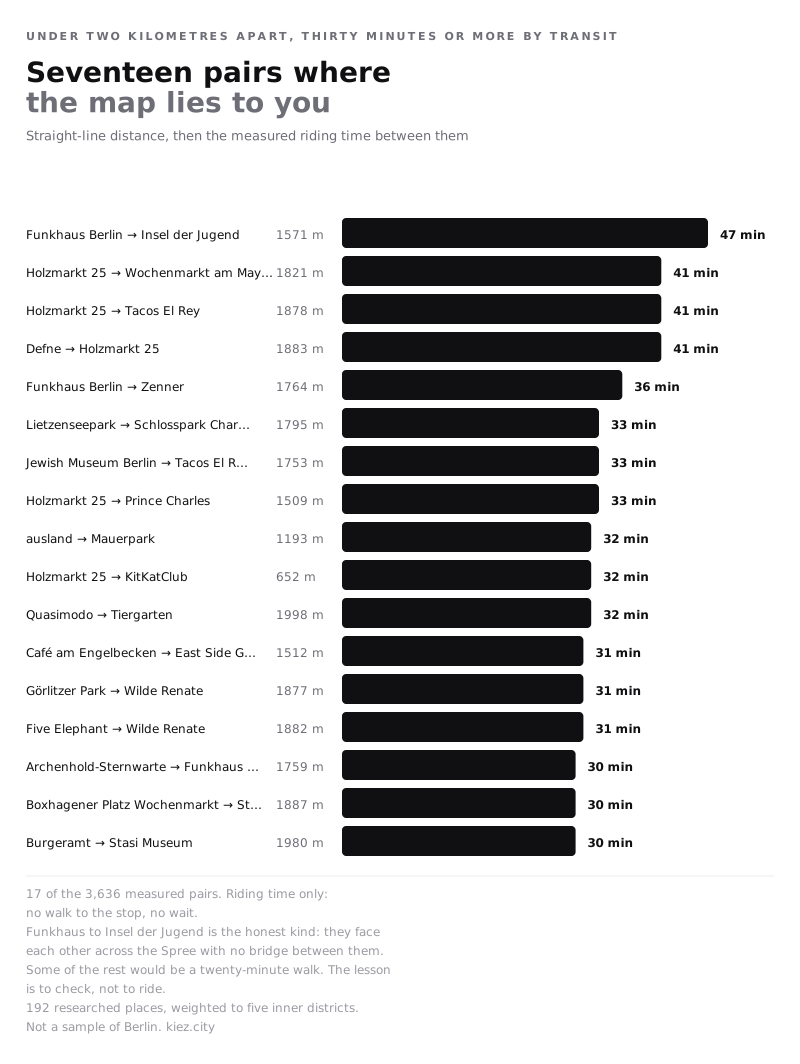
At the extreme this produces journeys that no one would believe from looking at a map.
Straight-line distance against measured riding time. Full size.
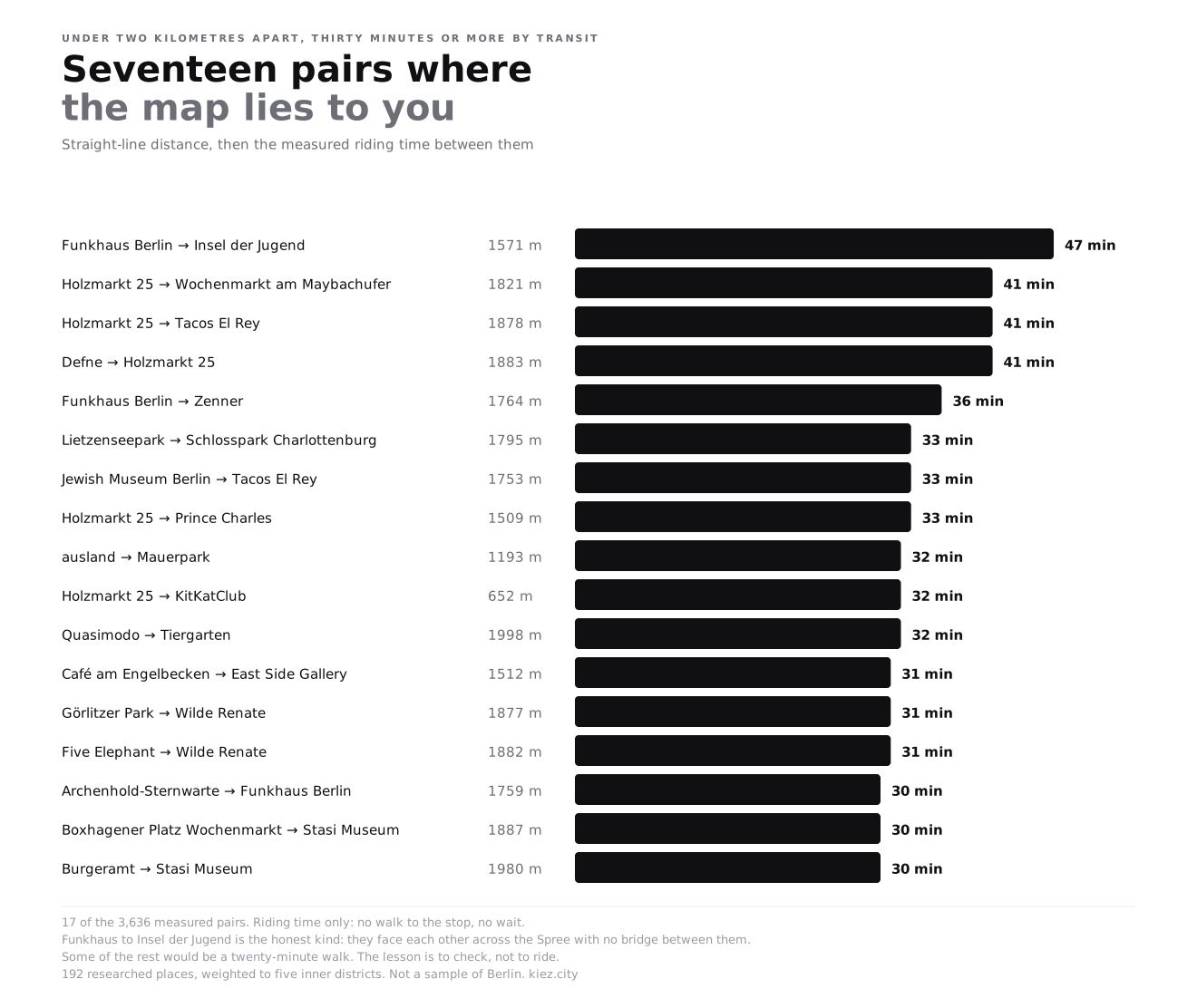
Seventeen of the 3,636 measured pairs are less than two kilometres apart and take thirty minutes or more. Funkhaus Berlin to Insel der Jugend is the worst at 47 minutes for 1,571 metres, and it is also the most honest one on the list: they face each other across the Spree, and there is no bridge between them. Holzmarkt 25 to the KitKatClub is 652 metres and 32 minutes.
Some of the rest would be a twenty-minute walk. That is the practical reading of this whole post. The instruction is to check rather than to ride.
What causes it
Berlin's rapid network is radial. The U-Bahn and S-Bahn lines run through the middle, the ring closes around them, and both are fast. Anything tangential, meaning three stops around the edge rather than through the centre, is a bus, or a change, or both. A journey that stays inside one area is usually tangential by construction, because an area is small enough that crossing it never puts you on a trunk line.
None of that is a criticism of the design. A radial network is what you build when most trips are into and out of a centre, and it is why Kreuzberg to Mitte covers more ground in less time than Kreuzberg to Kreuzberg does.
What this does not say
The measurement is riding time. It excludes the walk to the stop, the wait for the service, and the walk at the other end. Real door-to-door times are longer than every number here, and probably longer by more for the tangential journeys, since a bus every twelve minutes waits worse than a U-Bahn every four.
The departure is frozen. Every journey was requested for noon on a Monday, from two captures: 3 August and 10 August 2026. Both are stored under the departure date rather than the date the request was made, which is why one of them appears to sit in the future. We checked the effect of the frozen hour at four different times of the week and journeys moved by between zero and six minutes. Berlin runs often enough that the hour barely matters, but it is one reading and it is fair to treat it as one reading.
The areas are research areas, not Bezirke. They come from how the corpus was collected, so "Kreuzberg" here means the places the research filed under Kreuzberg, and the boundary is approximate.
Two problems in our own data are worth naming. Sixty-four pairs share a single station, and they carry no journey time at all, because the only honest figure for them is a walking time and this site does not publish one; the walking data the research collected turned out to be car routing. Separately, 66 pairs less than 300 metres apart do currently carry a journey time, and those times are wrong: the timetable routes them to a station and back, which is why one of them claims 25 minutes for a walk you can see. They are excluded from every number in this post. They have not yet been excluded from the place pages, where nineteen of them still show, and that fix is queued.
If you want the version of this that affects a day rather than a dataset, the districts in a day note works through which pairs of areas can reasonably be combined before dinner.