Berlin changes shift at six in the evening
At 17:30, three quarters of the culture places in our sample are open. Half an hour later, a third are. The handover from museums to bars happens inside one half-hour slot, and it is the sharpest edge anywhere in the week.
The most abrupt thing in Berlin's week is not the weekend. It is a half-hour slot on an ordinary evening.
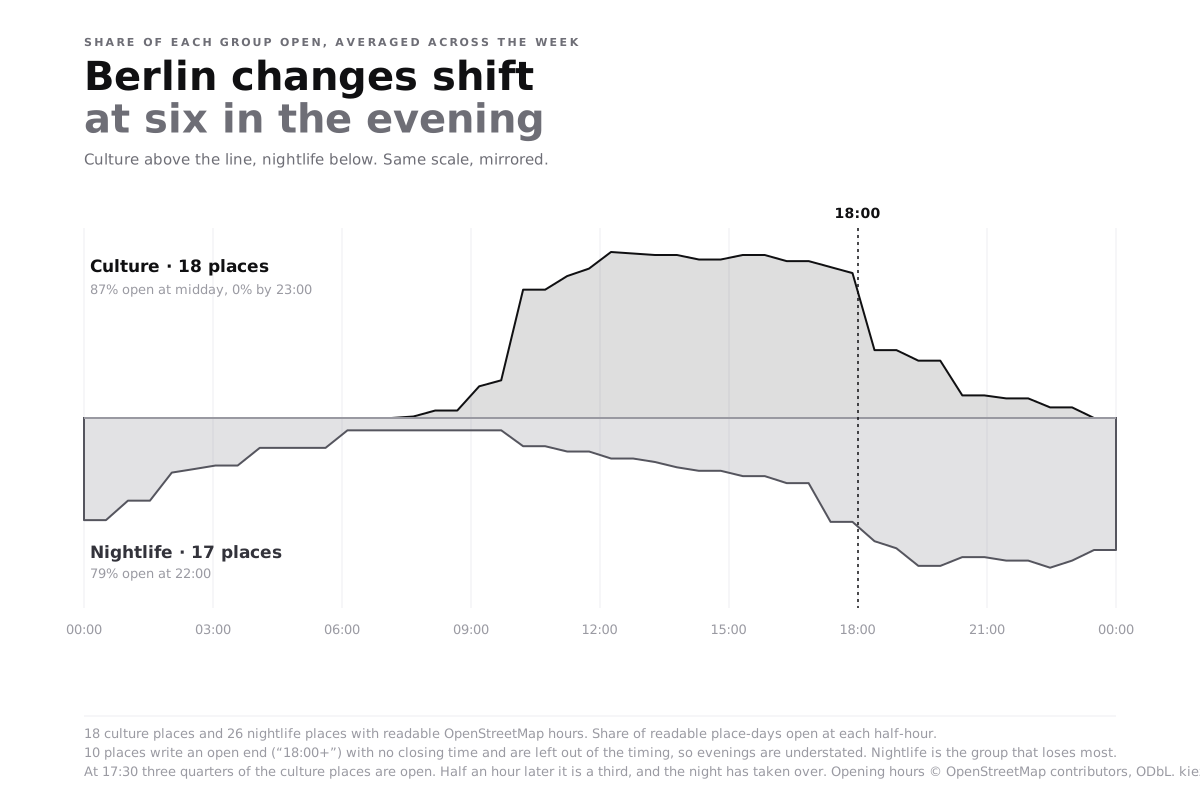
At 17:30, 76% of the culture place-days in our sample are open: museums, memorials, galleries, planetariums. At 18:00, 36% are. The city hands itself over from one kind of place to another inside thirty minutes, and it does it every day.
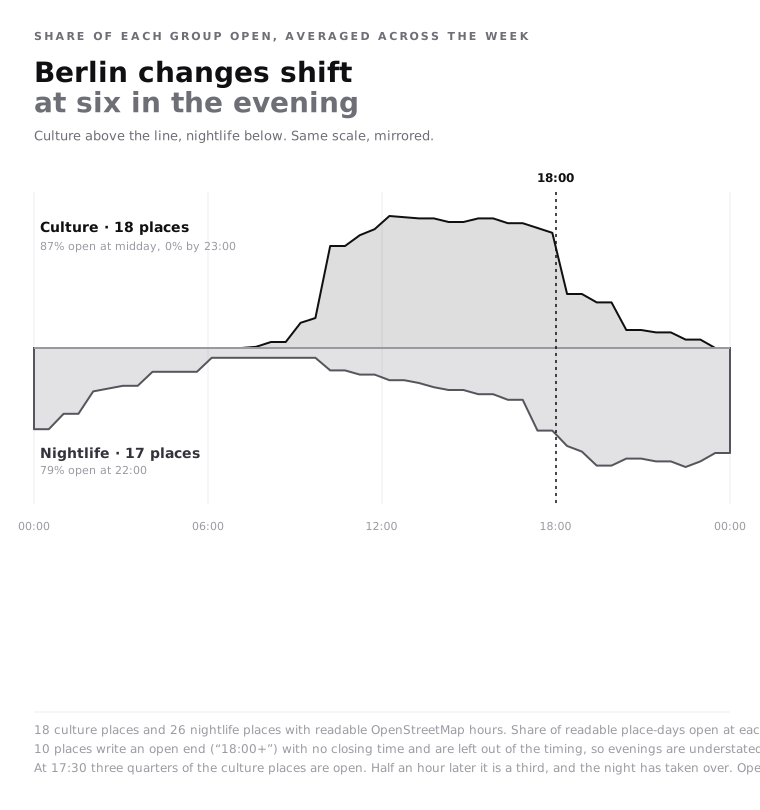
Share of readable place-days open at each half hour. Full size.
What the two lines are counting
Both lines are shares of place-days, not places. A place-day is one venue on one weekday whose opening hours our parser could read for that day. Culture contributes 126 of them, which is 18 places across seven days. Nightlife contributes 108, which is between 14 and 17 places depending on the day.
That denominator matters for how much weight each half of the chart carries. The culture side is the strong half: the drop from 17:30 to 18:00 is 51 place-days, around seven venues on an average day out of eighteen, and it is the single largest movement anywhere in the 48 slots. Nightlife moves by 11 place-days over the same half hour, which is closer to one and a half venues a day. Its direction is clear and its size is small, so a reader should treat the rising line as weaker evidence than the falling one.
Neither line is the mirror of the other, whatever the shape suggests. Culture and nightlife are both above a quarter open for six and a half hours of the day. There is plenty of overlap; what there is not is symmetry, because one side leaves in a block and the other arrives gradually.
Berlin opens at ten or twelve and closes at six, ten or midnight
Zoom out from the handover and the whole day is built from a small number of round numbers.
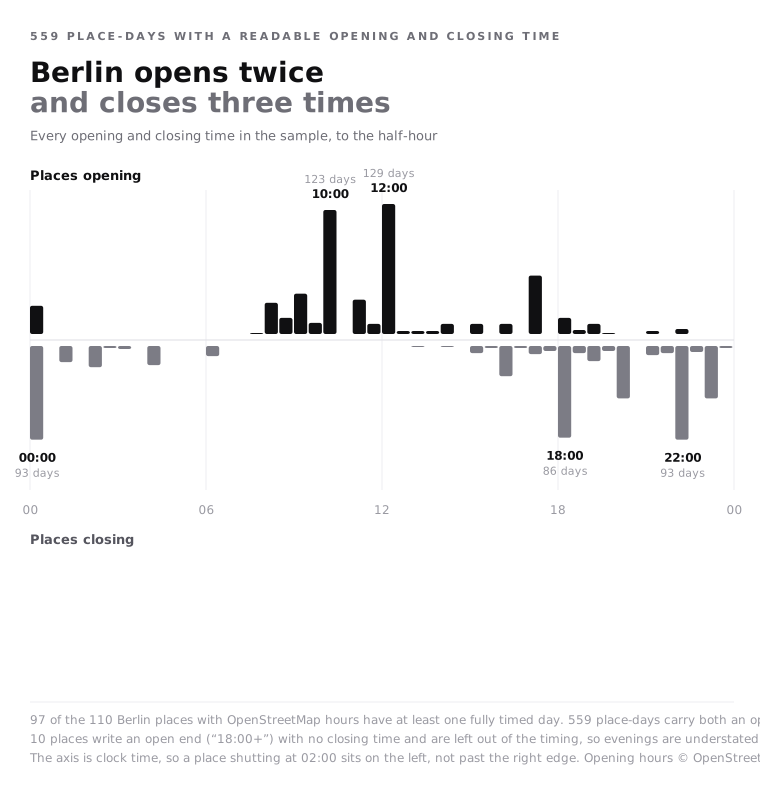
Opening and closing clock times across 559 place-days with a full span. Full size.
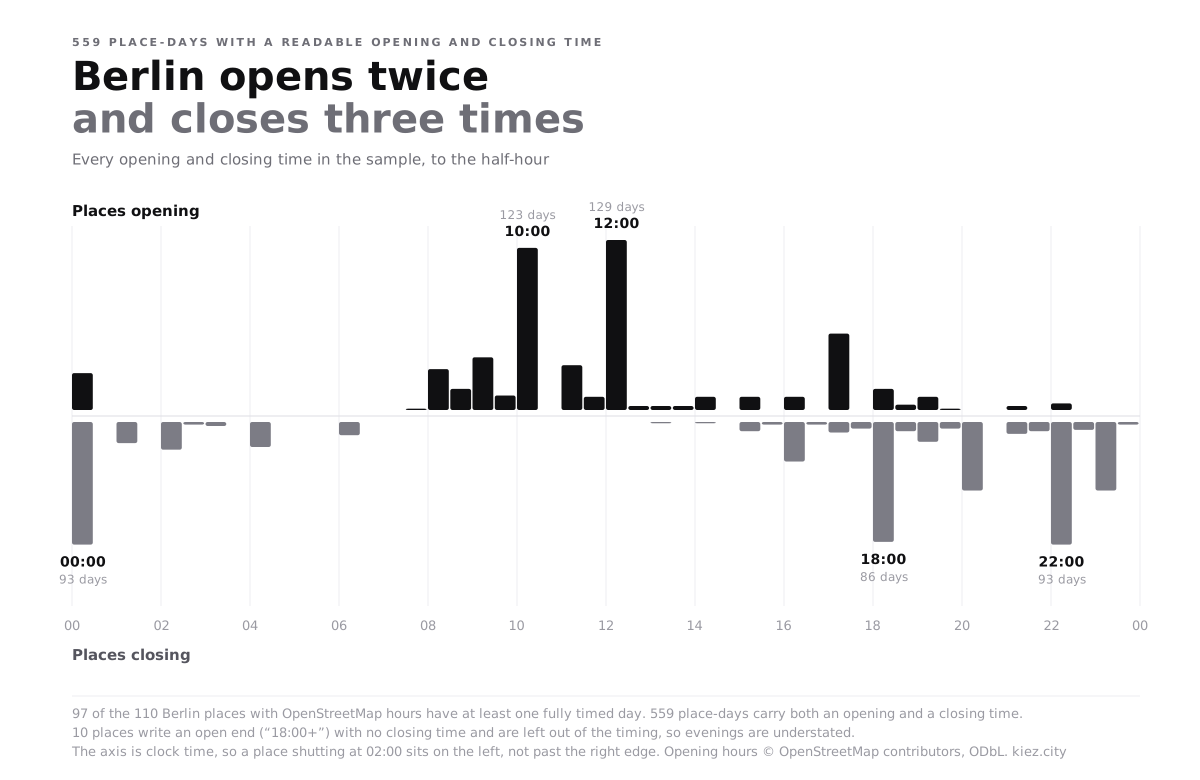
Of the 559 place-days that carry both an opening and a closing time, 129 open at 12:00 and 123 at 10:00. Together those two account for 45% of every opening in the sample. Nothing else comes close except 17:00, with 58, which is the nightlife shift arriving.
Closings are flatter and have three peaks rather than two: midnight with 93, 22:00 with 93, and 18:00 with 86. The median opening across the whole sample is 11:00 and the median closing is 18:00, which describes a city with a seven-hour public day and a long evening bolted on to the end of it.
The practical consequence is the one every visitor discovers by walking into a locked door. Berlin's daytime and its evening are separate systems with a hinge between them, and the hinge is at six.
Two things that make these numbers softer than they look
Ten places in the sample write at least one span with no closing time at all,
in the form 21:00+. That is 34 individual spans, and they are dropped rather
than guessed at. Most of them are nightlife and food. Every chart here therefore
understates the evening, and understates nightlife most of all. None of this can
support a claim about how late Berlin stays open.
The other softness is the sample itself. Nineteen culture places is a small number for a city with more state museums than most countries, and the sample was assembled for a day planner rather than for a census. It leans on the five inner areas the research covered properly. What the chart shows is a real property of those places, and whether it generalises to Charlottenburg or Spandau is a separate question this data cannot answer.
Hours come from OpenStreetMap where it has them. Where two sources disagree about a place we keep both rather than picking a winner, because a wrong opening time parses cleanly, renders neatly and schedules happily, and comparing two sources is the only way to find one at all.
If you are planning around the hinge rather than reading about it, the note on what closes on Monday covers the other axis of the same problem, which is the day rather than the hour.