Berlin puts a stop outside almost everything
The median place in this guide is 193 metres from its nearest tram, bus, U-Bahn or S-Bahn stop. Two thirds are inside 250 metres and 94% inside 400. The eleven exceptions are all the same kind of place, and one of them is not really an exception at all.
Ask any Berliner about the BVG and you will get a complaint. Measure the network's coverage and you get something the complaint tends to leave out.
For each of the 192 mapped places in this corpus we looked up the nearest stop of any kind: tram, bus, U-Bahn or S-Bahn. The median distance is 193 metres. Two thirds of the places are inside 250 metres. A hundred and eighty-one of them, 94%, are inside 400.
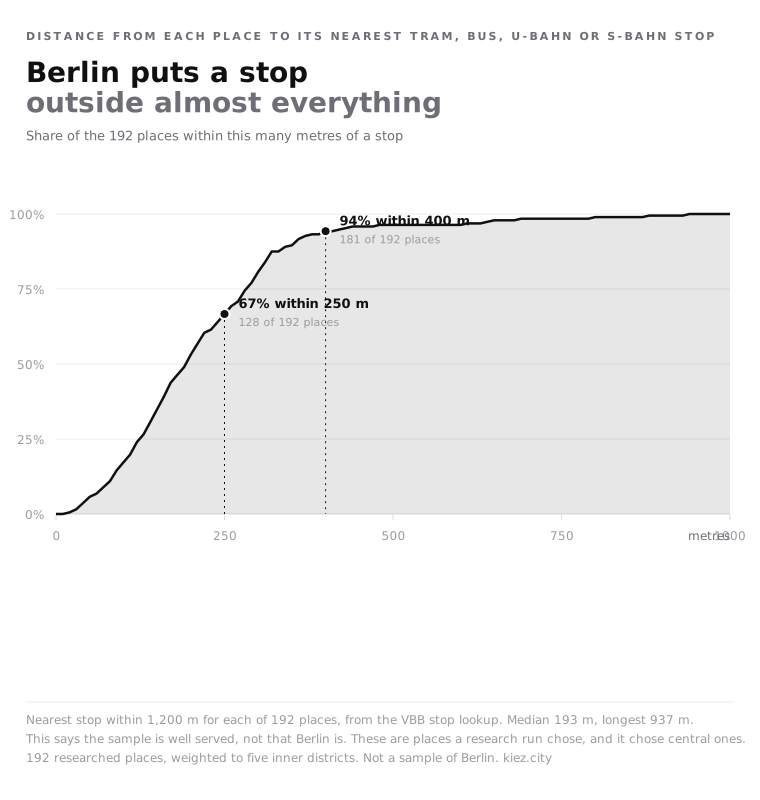
Share of 192 places within this many metres of a stop. Full size.
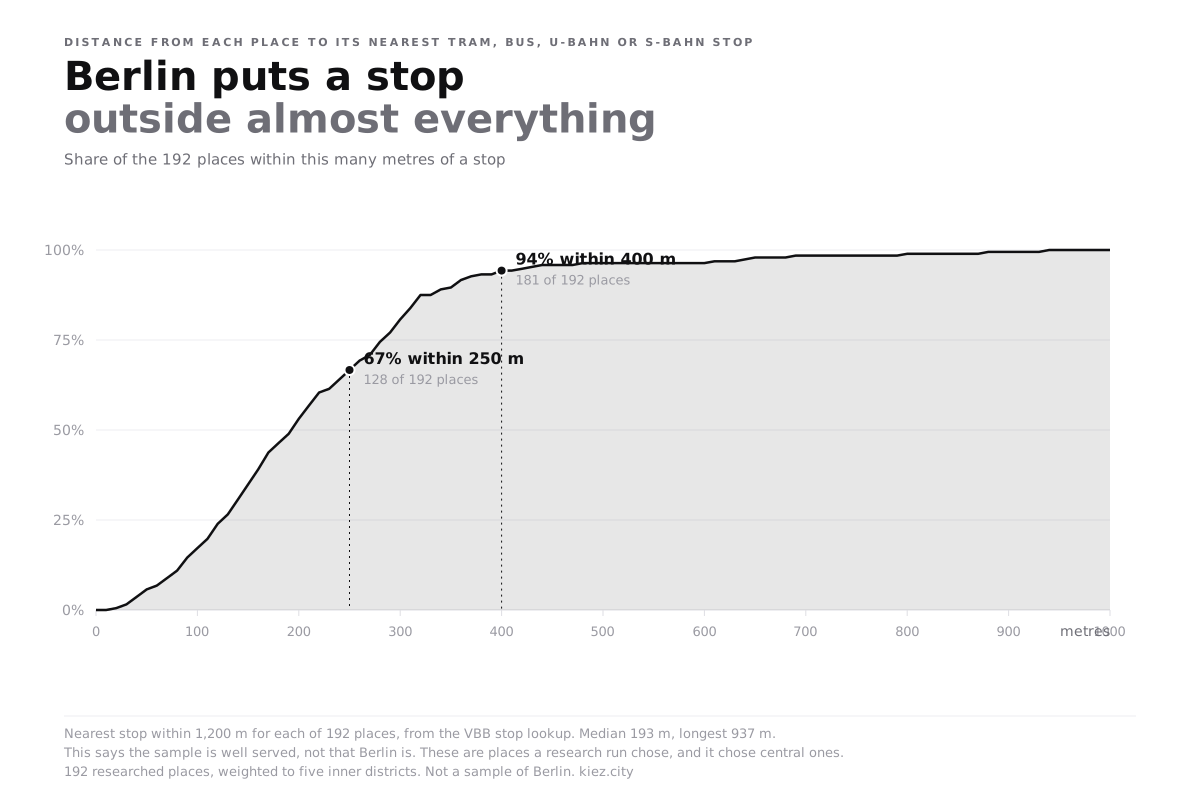
Four hundred metres is our threshold rather than an official one, chosen because it is about a five-minute walk for most people and because it is the figure transport planning tends to draw catchments at. Nothing about the curve depends on it. The shape is steep well before that point: half the sample is inside 200 metres, which is a distance you would not describe as a walk.
The eleven
Everything above 400 metres is one kind of place.
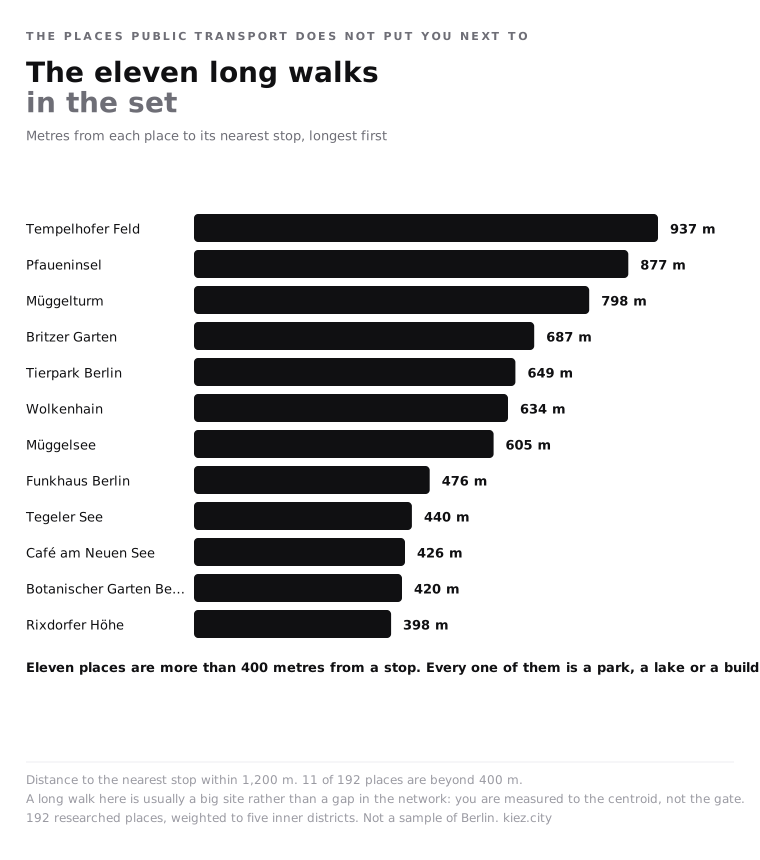
The eleven places beyond 400 metres. Full size.
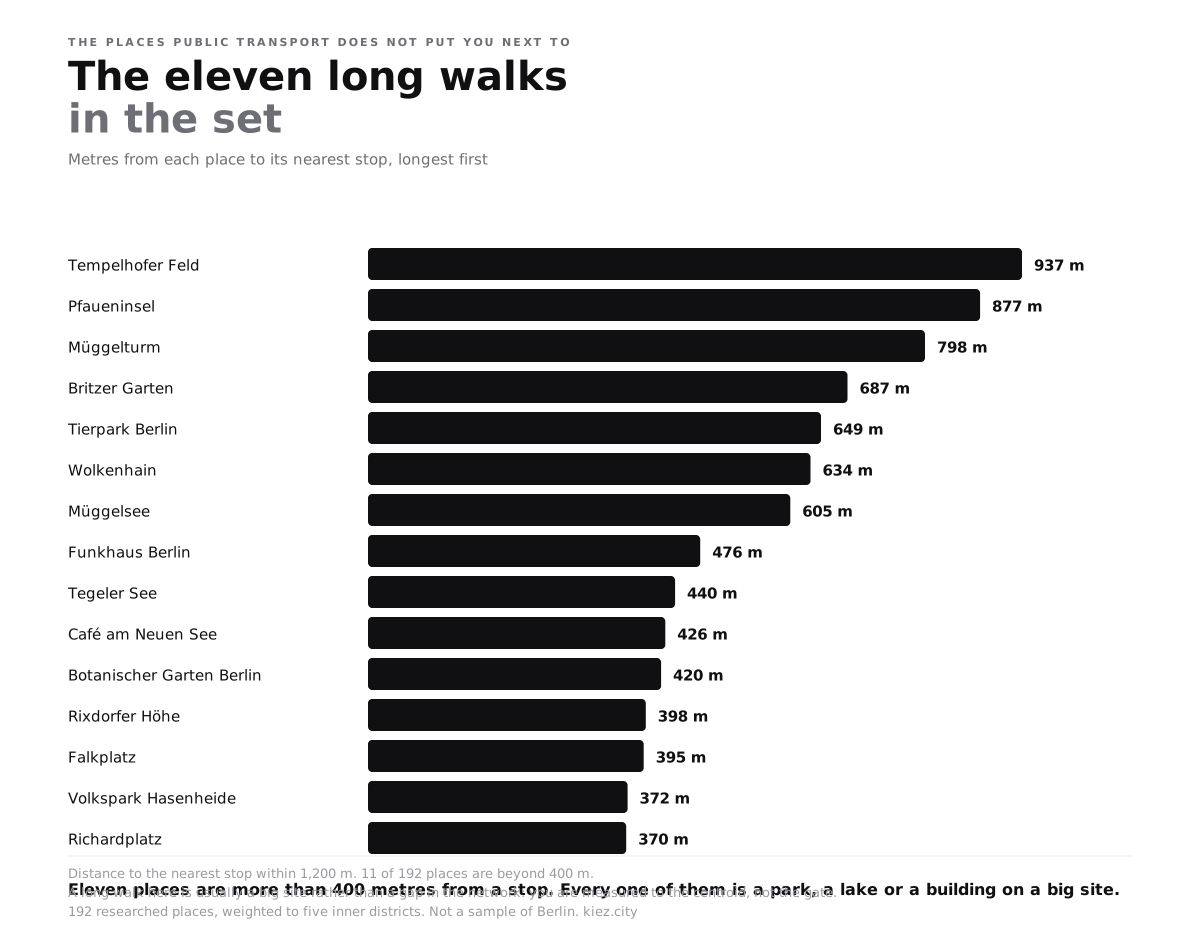
Tempelhofer Feld at 937 metres, Pfaueninsel at 877, Müggelturm at 798, the Britzer Garten at 687, the Tierpark at 649, the Wolkenhain at 634, Müggelsee at 605, Funkhaus Berlin at 476, Tegeler See at 440, the Café am Neuen See at 426 and the Botanischer Garten at 420.
Lakes, gardens, a viewing hill, a zoo, an island, a former broadcast complex and a beer garden inside the Tiergarten. There is no restaurant on this list, no bar, no museum with a street door. The pattern is that Berlin puts a stop outside anything with an address, and large open ground does not have one.
Why Tempelhofer Feld is a measurement artefact
The furthest place in the sample is the one nobody would call badly served, and that is worth explaining rather than leaving as a curiosity.
Every place in this corpus is a single coordinate. For a restaurant that is correct to within a doorway. For Tempelhofer Feld, which is around 300 hectares with a perimeter of some six kilometres, a single coordinate lands somewhere near the middle of a former runway, and the distance from there to the nearest stop is 937 metres. The actual field has U-Bahn and S-Bahn stations at several of its gates.
The same correction applies in weaker form to the Britzer Garten, the Tierpark and the lakes. Read the eleven as a list of large sites rather than as a list of places you cannot reach.
The places are as close to each other as they are to the stops
The stop density has a twin, and it is the reason a day plan built from this corpus tends to work at all.
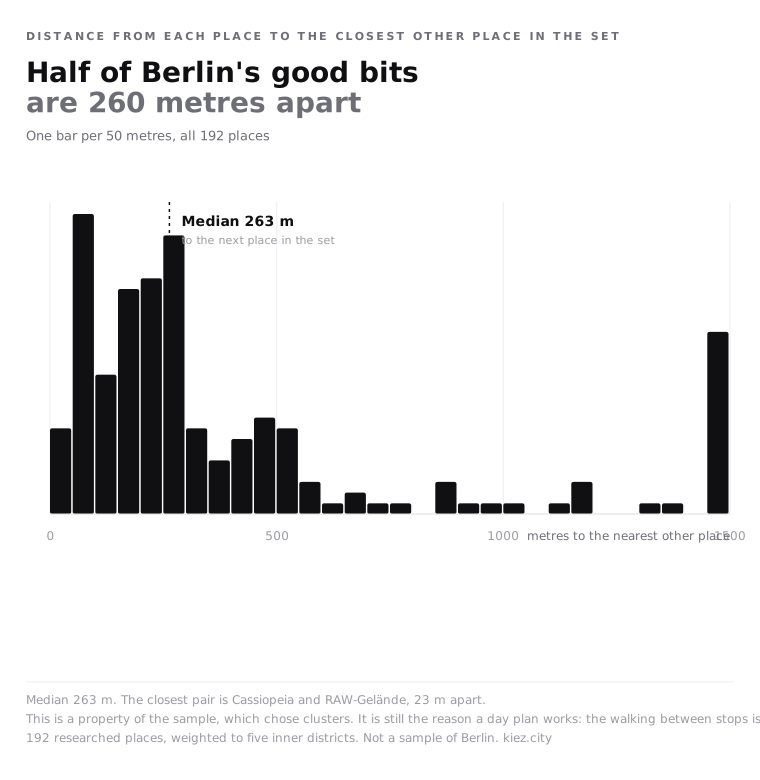
Distance from each place to the closest other place in the set. Full size.
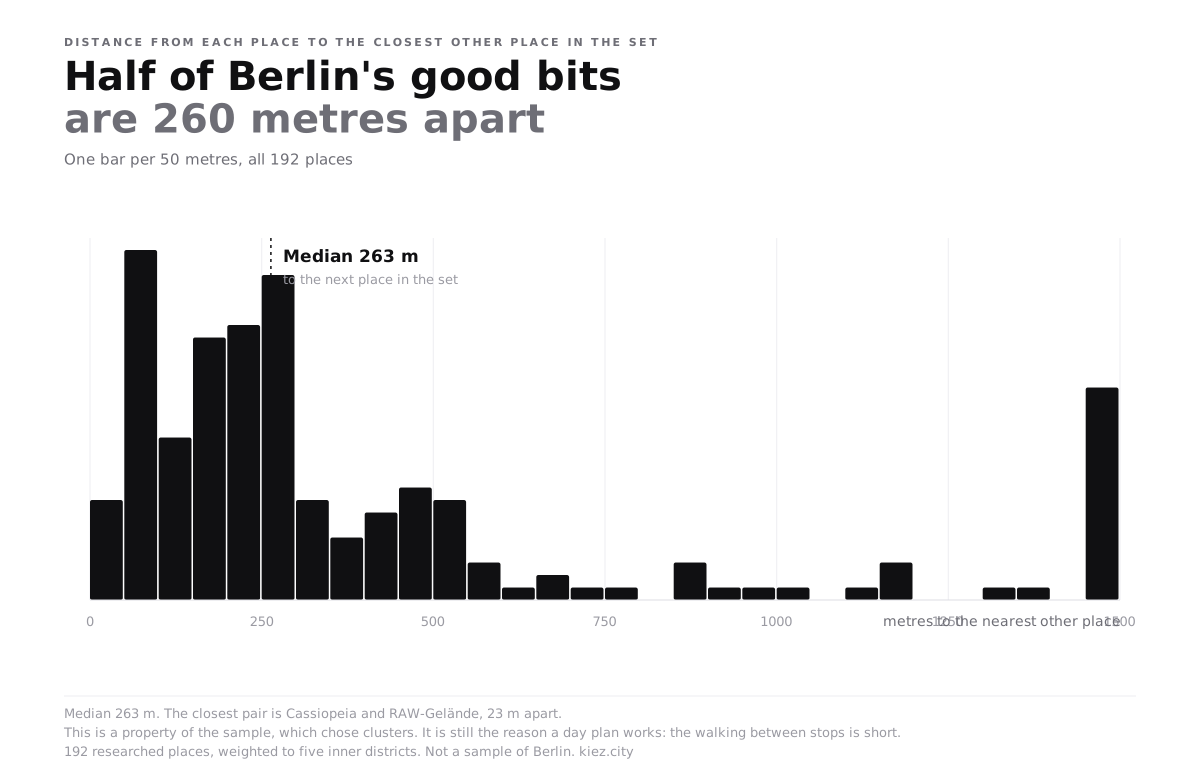
The median place has another place in the corpus 263 metres away. Thirty-six of the 192 have one inside 100 metres. The closest pair is Cassiopeia and the RAW-Gelände at 23 metres, which is really one site recorded twice under two names.
At the other end, a tenth of the sample has nothing within 1,177 metres, and the loneliest place has nothing within 5.4 kilometres. Those are the lakes and the outer gardens again.
The stop data shows the same clustering from the other side: 146 distinct stops serve 192 places, and the busiest three stops serve four places each. Kottbusser Brücke, Karl-Marx-Platz and U Senefelderplatz each put you within walking distance of four things in this guide at once.
None of this is a fact about Berlin. It is a fact about a research run that went looking for clusters, and it is the reason two or three places can share an afternoon without a journey in the middle.
What this does not prove
It does not show that Berlin is well served by public transport. It shows that these 192 places are, and the 192 were chosen by a research run that concentrated on the inner city. Seventy per cent of them sit within five kilometres of Alexanderplatz, in exactly the part of Berlin where the network is densest.
The outer city has genuinely worse coverage, and this dataset cannot show you that, because it barely goes there. A study of Marzahn, Spandau and Reinickendorf would produce a different curve, and the corpus has eight places across all three.
Two smaller notes on the method. The distance is straight-line, not a walking route, so the real walk is longer wherever a canal, a railway or a fenced block sits between you and the stop. And the lookup searched within 1,200 metres and found something for every place, which means no place in the sample is worse than 937 metres from a stop, rather than that we stopped looking.
One consequence of this density shows up elsewhere in the data. Because so many places share a stop, 64 pairs in our transit matrix sit at the same station and carry no journey time at all: the only honest figure for those is a walking time, and the walking data this research collected turned out to be car routing. The note on journeys inside a neighbourhood works through what that does to the rest of the numbers.