A guide to Berlin with no cinema, no theatre, no pool and no library in it
Seventeen categories cover all 192 places in this corpus, one each. Forty-one restaurants, thirty-five clubs, twenty-six parks. Nothing filed as a cinema, a theatre, a swimming pool, a library or a church. A guide is a set of decisions before it is a set of facts.
The most revealing thing about a city guide is usually the list of things it never thought to include.
Every place in this corpus carries exactly one category. There are seventeen of them across 192 places. Forty-one restaurants, thirty-five clubs, twenty-six parks, seventeen landmarks, fourteen neighbourhood spots, thirteen museums, ten cafés, six bars, then a tail of fives and threes: markets, riverfronts, gardens, lakes, galleries, Imbisse, two bakeries, one food hall, one karaoke bar.
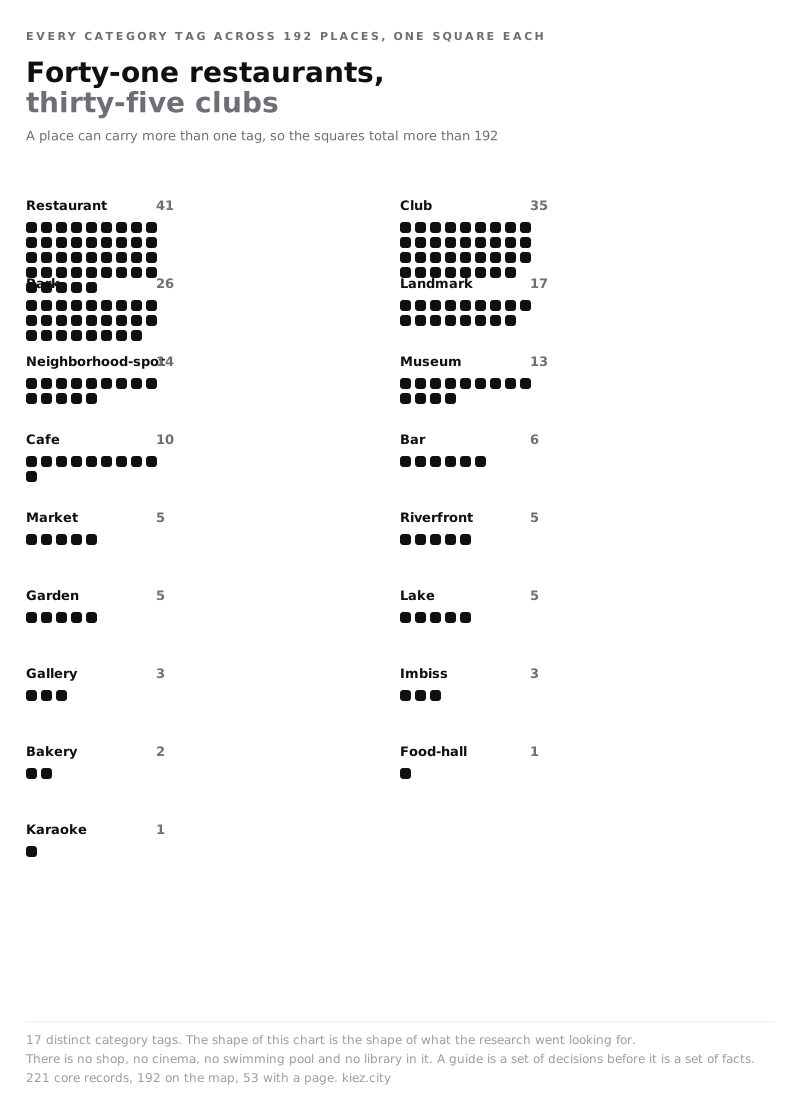
Categories across 192 places, one per place. Full size.
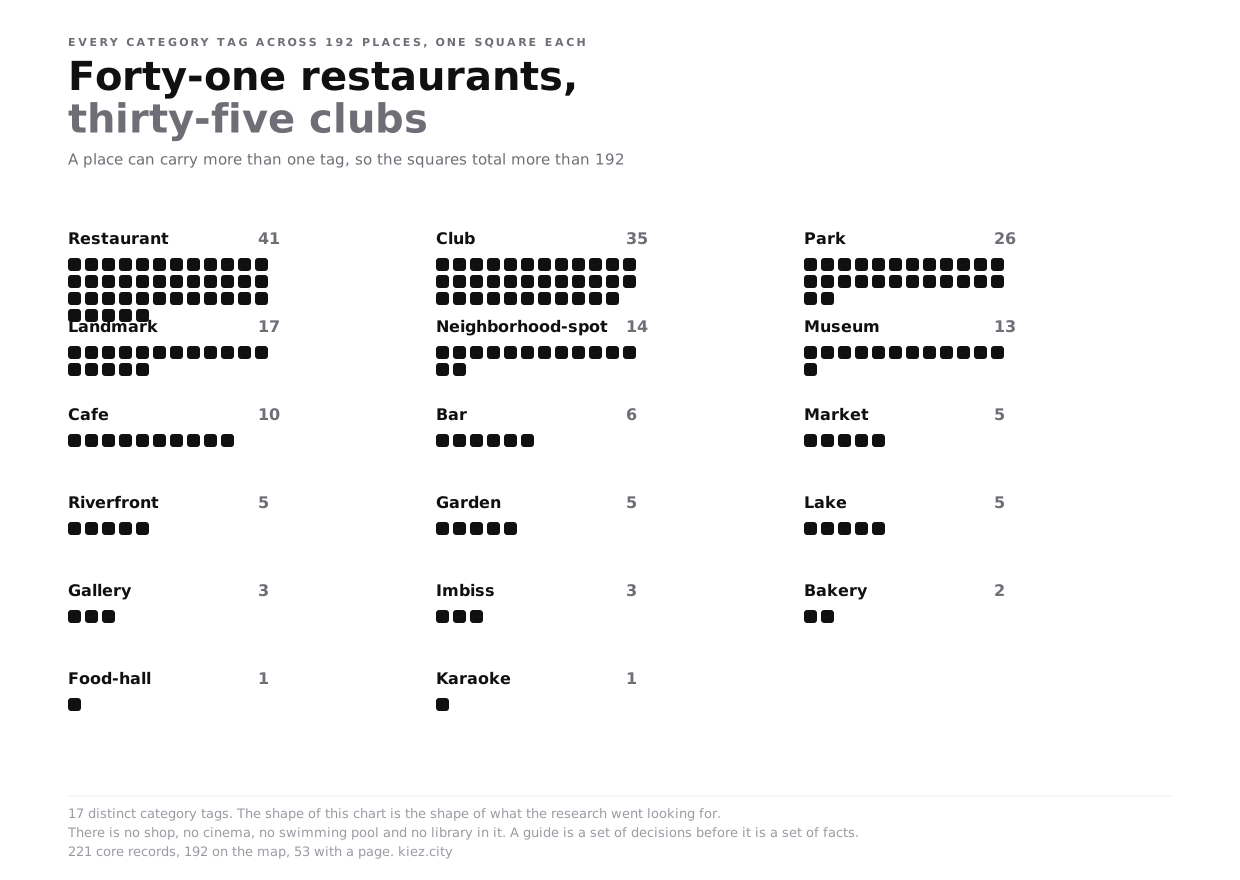
Now the absences. There is no cinema, in a city with something like ninety of them, and nothing filed as a theatre, an opera house or a concert hall, in the city of the Volksbühne and the Staatsoper. Swimming pools and libraries are missing entirely. So are churches, which means the Berliner Dom and the Gedächtniskirche are both absent from a corpus that does contain three Schlösser and a citadel.
Two places in the list are somewhere you go to buy things: the Dong Xuan Center in Lichtenberg and the Hackesche Höfe. Both are filed as neighbourhood spots rather than as retail, because the corpus has no retail category to file them under.
What the shape describes
Group the categories up and the corpus is 57 food places, 42 nightlife, 41 outdoors, 33 culture and 19 markets. That is a document about eating, drinking, walking around and occasionally going to a museum, which is a fair description of a day off and a poor description of a city.
The absences all point the same way. A cinema, a swimming pool and a library are places you go alone, on a schedule of your own, often in bad weather, and usually near where you live. A restaurant, a club and a park are places you take someone. The research was assembled to answer "what should we do on Saturday", and it turns out that question quietly excludes about half of urban life.
Whether that is a problem depends on what the guide claims to be. Ours plans a day out, so the shape is roughly right for its purpose. It would be a bad basis for anything describing how Berlin works.
How much is actually known about each one
The category is the least of it. How much evidence sits behind each place is the more useful question, and the picture there is very uneven.
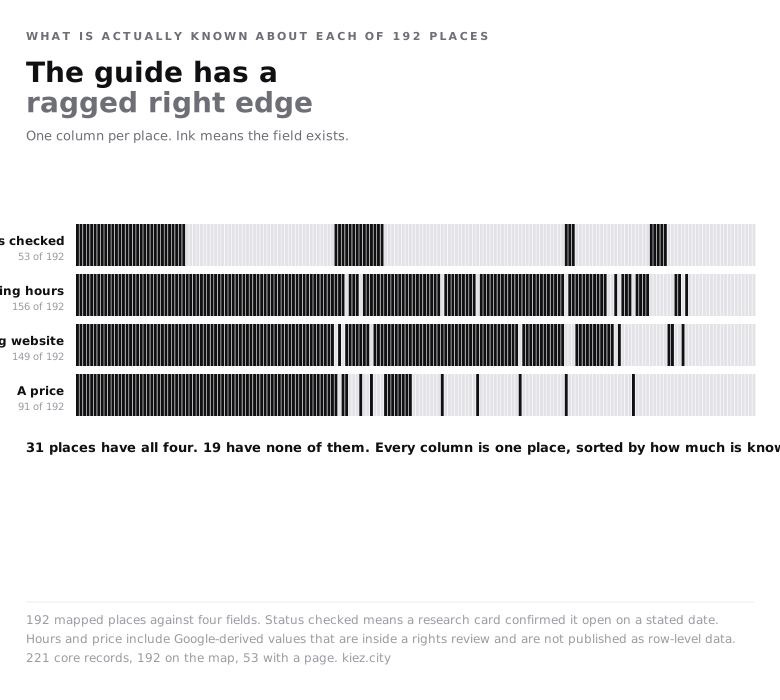
Four fields against 192 places, sorted by how much is known. Full size.
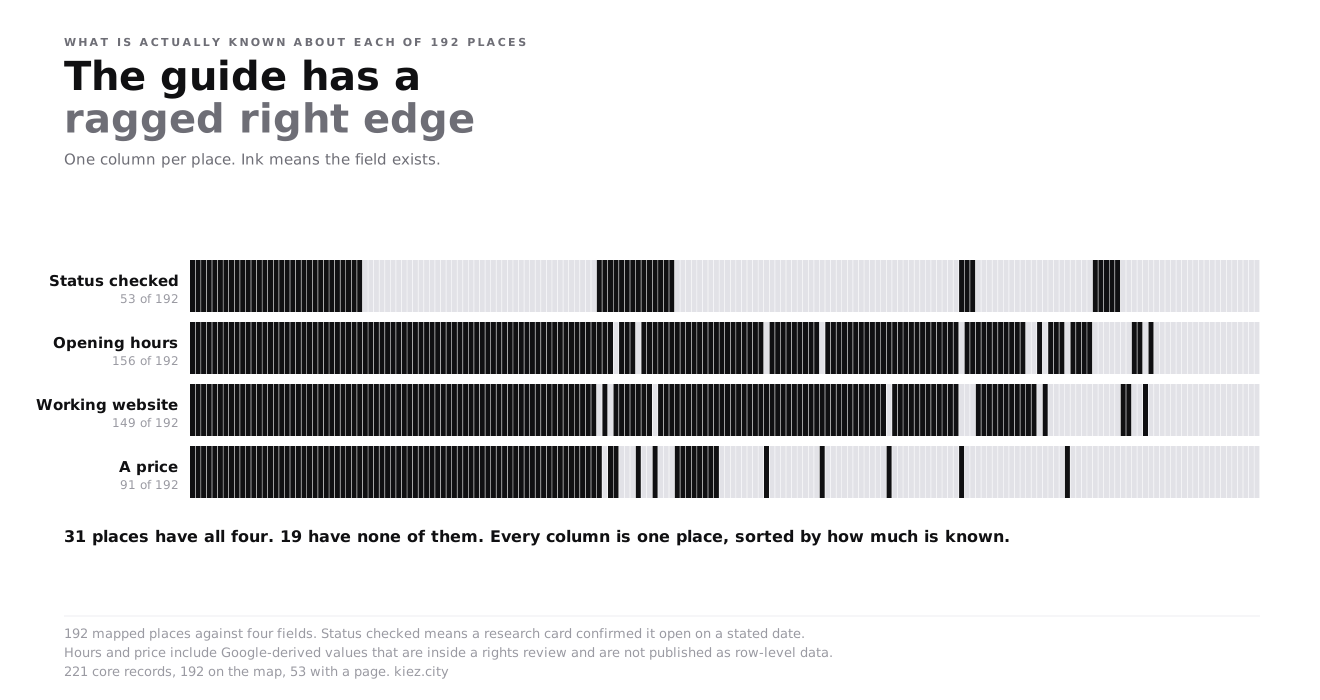
A hundred and fifty-six places have opening hours. A hundred and forty-nine have
a website. Ninety-one have a price. Fifty-three have been confirmed open on a
stated date by a research card, and the other 139 carry the status unverified,
which means the place was recorded once and never confirmed.
Thirty-one places have all four. Nineteen have none of them, and those nineteen exist in this corpus as a name, a coordinate and a single sourced line.
That word unverified does real work and it is worth being precise about it. It
does not mean a place is doubtful. It means nobody checked it after it was
written down, so the site must not describe it as "last checked" on any date.
All 192 rows carry the same date, 2 August 2026, because that is the corpus run
date rather than 192 separate visits.
Two caveats about the fields themselves
Hours and price include values derived from Google, which sit inside a rights review and are not published here as row-level data. They are counted in the chart because leaving them out would overstate the gaps, and they are not exposed because the terms have not been cleared. Where OpenStreetMap has hours we prefer them, and both readings are kept so they can be compared.
The categories themselves are a research artefact rather than a taxonomy. They were assigned during collection, one per place, by whoever wrote the record. A place like the Kulturbrauerei is a courtyard, a cinema, a club, a museum and a supermarket at once, and it is filed under one of those. Read the counts as a description of how the corpus thinks, which is what they are.
The note on coverage covers the other axis of the same problem, which is where these 192 places sit rather than what kind of thing each one is.