Nothing in Berlin takes Friday off
Read the opening hours of 97 Berlin places across a full week and one column is empty. No restaurant, no bar, no museum and no park in the sample closes on a Friday. Monday closes 28 of them.
There is a shape in Berlin's week that nobody advertises and everybody has run into. It is easiest to see by asking which day each place takes off.
Across the 97 places whose hours our parser can read, and counting only the groups where a closing day means something, Friday closes nothing. Not one restaurant, not one bar or club, not one museum, not one park. Monday closes 28.
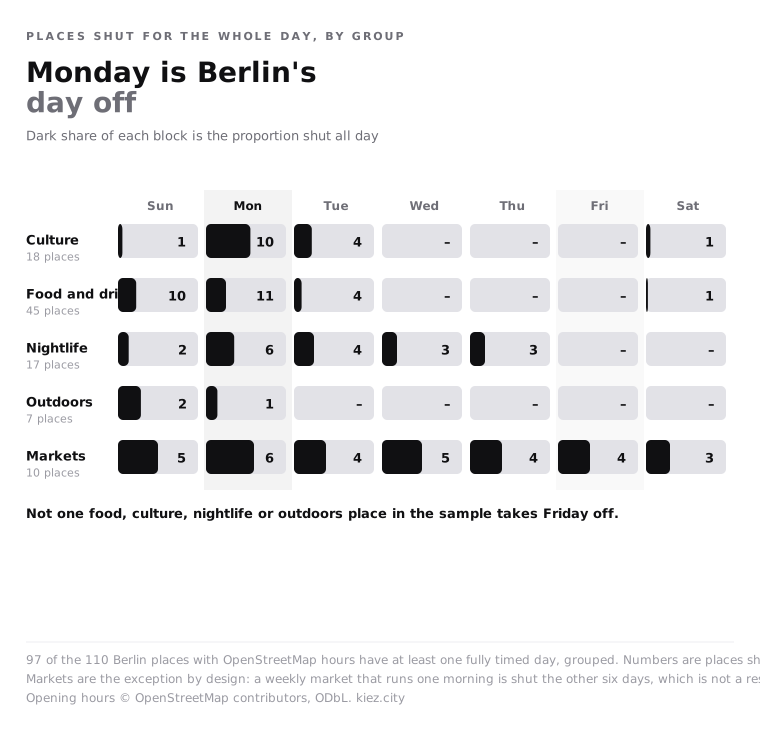
Places closed on each weekday, by group. Full size.
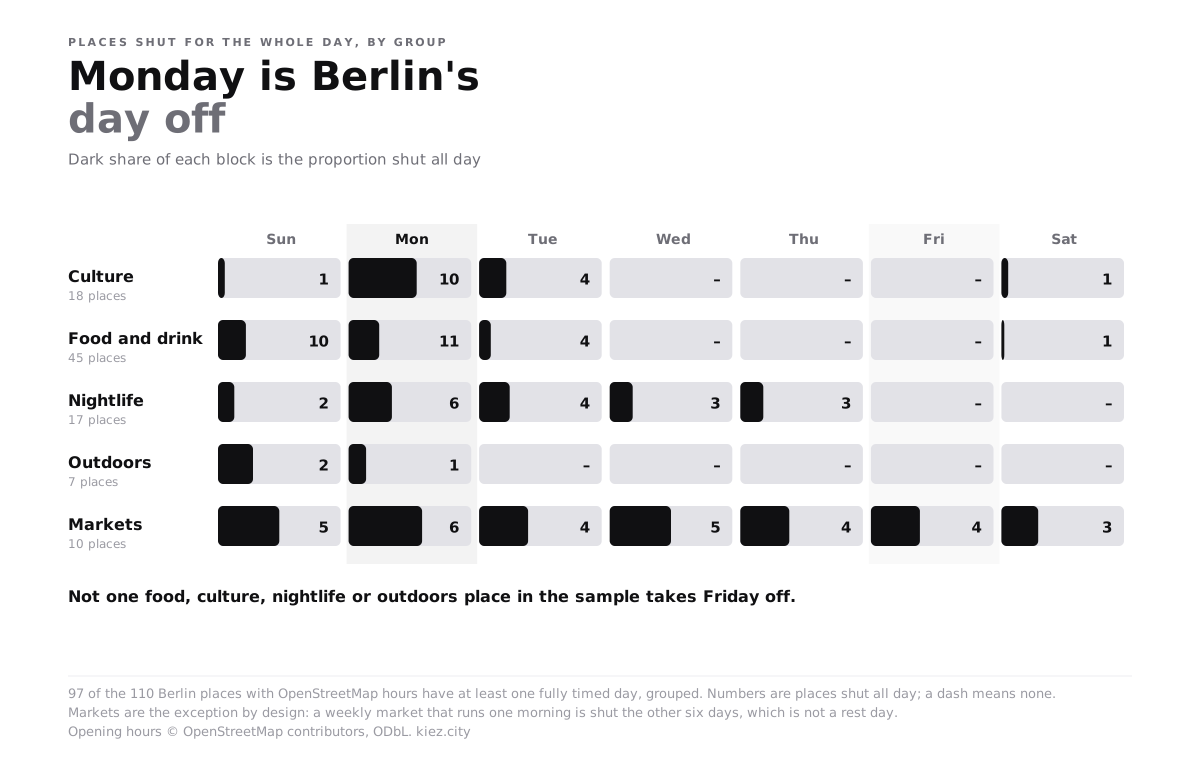
The Monday column
Monday takes something from every group at once, which is the part that makes it awkward rather than merely inconvenient.
Ten of the eighteen readable culture places close. Eleven of the 44 restaurant and café days close. Six of the seventeen readable nightlife days close, and even the outdoors group loses one. If you arrive on a Sunday night and plan around a Monday, more than half the museums are gone and roughly a quarter of the restaurants with them, and the two losses are not the same places from one week to the next.
Sunday is the second heaviest, and it hits differently. Ten restaurants close but only one culture place does. Sunday in Berlin is a day for the state museums and the parks, and a bad day to have a particular restaurant in mind.
Tuesday is a quiet fourth, with four closures in each of the four groups. That number is small but it is the reminder that the Ruhetag is a decision each venue makes on its own. One Neukölln restaurant in the corpus closes on a Tuesday and opens on Monday, which is exactly the case that breaks a rule of thumb.
Why the drop is steepest for culture
Splitting the same data by how much each group loses on a Monday makes the ranking clear.
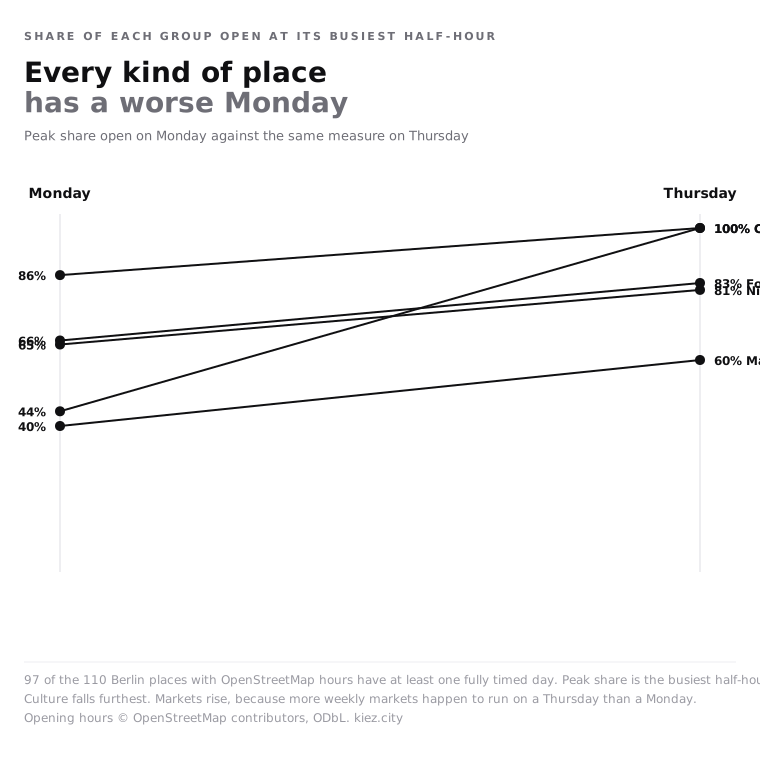
How far each group falls on a Monday against its own weekly level. Full size.
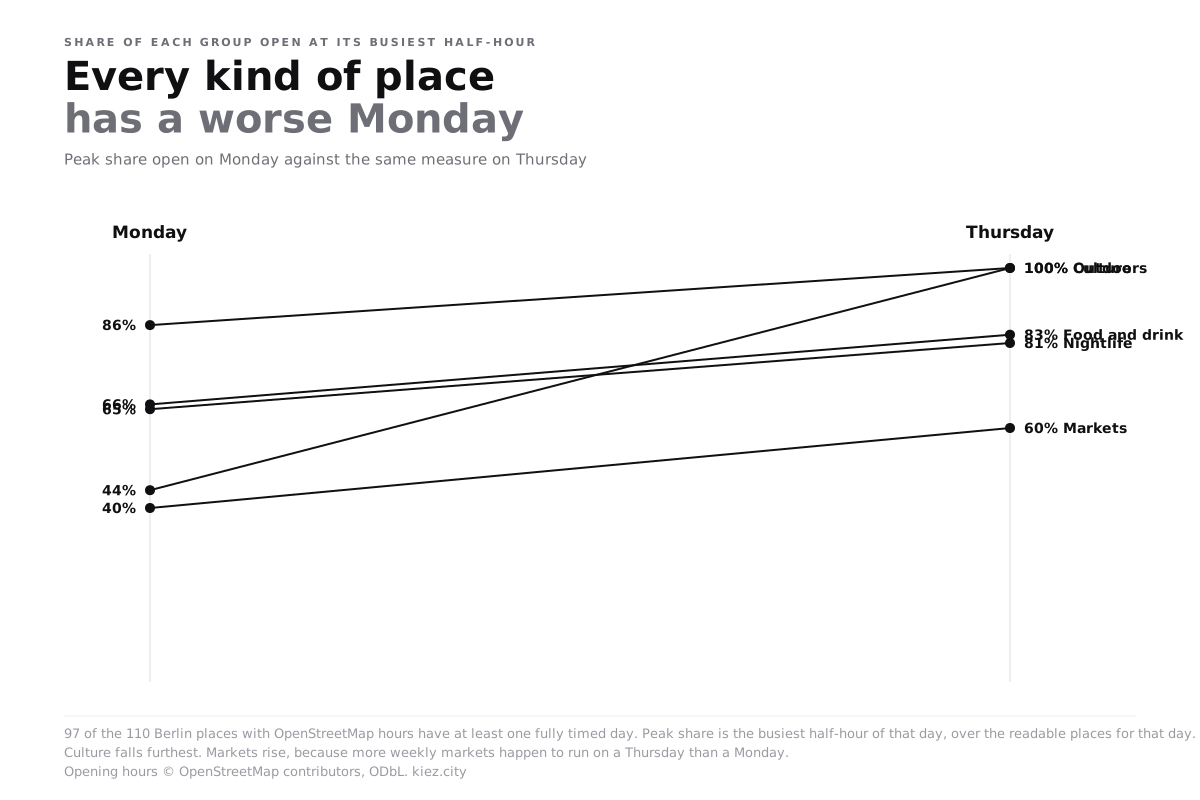
Culture loses more than half its places. Nothing else comes close. Museums close on Mondays for reasons that have nothing to do with demand: it is the conventional maintenance and installation day across most of the German museum system, and the Staatliche Museen apply it across several of the Museumsinsel houses at once.
Berlin's whole open count follows. The busiest half hour on a Thursday has 72 places open in the sample; the busiest half hour on a Monday has 50. That is a 30% smaller city, on the same map, with the same transport running.
The reason Friday is empty
A closing day costs a venue a day of trade, so it goes where the trade is thinnest. For a Berlin restaurant that is the start of the week, and for a museum it is the day the least walk-in traffic exists. Friday is the opposite of that for every group at once, which is why nothing puts its Ruhetag there.
Markets are the exception in the chart, and they are the exception for a boring reason. A market that runs one day a week is closed on six by design, so four markets being shut on a Friday says nothing about Friday. They are drawn because leaving them out would hide a group, and they should be read as a different kind of row.
What this is and is not
This counts places whose hours we can read, which is 97 of the 192 in the corpus and 97 of the 110 that carry an hours string at all. Thirteen places have hours written in a form our parser cannot interpret on any day, including several clubs whose hours are genuinely per-event. Ten more have at least one span with no closing time. The evening and the nightlife group are therefore understated here, as they are in every hours chart on this site.
It also counts a place as closed only when a source says so. This is the difference between this post and our earlier note on what closes on Monday, which lists seventeen named places whose own website states a Monday position, with the source for each. That post is narrower, better sourced and more useful if you have a specific place in mind. This one is wider and shows the shape.
Public holidays are a separate problem and a worse one. A Monday that falls on a holiday behaves nothing like an ordinary Monday, and hardly any of this data addresses the difference. Before a day depends on two or three specific places, check those two or three.