At three in the morning on a Wednesday: a bar, a grill house and a karaoke room
Berlin at 03:00, according to 110 sets of recorded opening hours. Three venues midweek, six at the weekend, and four pieces of public ground that never close. The city has more than this. What it does not have is more than this written down.
Start with the caveat, because this is the kind of number that invites a correct objection.
Berlin at three in the morning is larger than any dataset of it. The corpus behind this site holds 110 places with recorded opening hours, drawn from a research run that was looking for places worth a day out. It is not a register of the city and nobody should read it as one. Every Späti, every night bus kiosk, every bar that never got tagged in OpenStreetMap is missing.
With that said: on a Wednesday at 03:00, the recorded city is seven places, and three of them have staff.
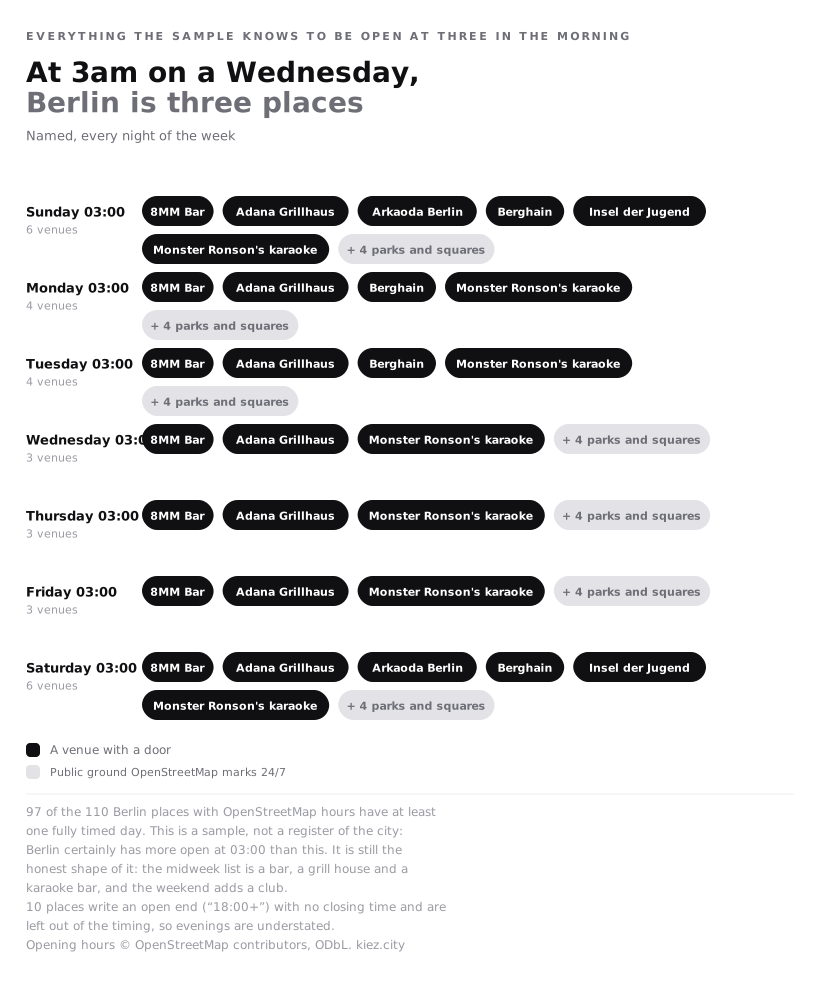
Named places open at 03:00, by day. Full size.
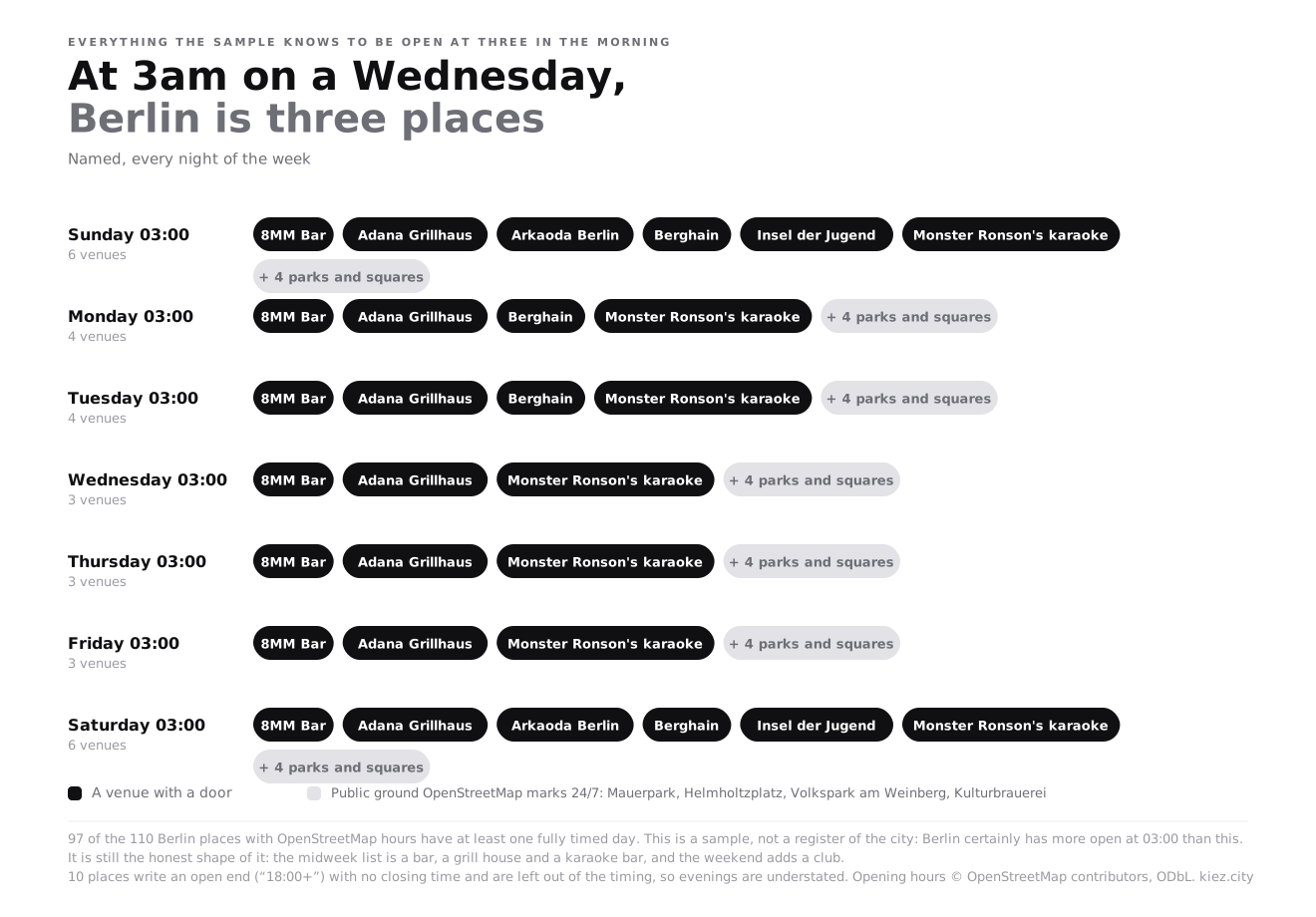
Midweek
The three are 8MM Bar in Prenzlauer Berg, the Adana Grillhaus, and Monster
Ronson's Ichiban Karaoke in Friedrichshain. Their hours strings, read straight
from OpenStreetMap, are almost comically plain about it. 8MM is Mo-Su 19:00-04:00. Adana is 12:00-04:00, with no day prefix at all, which means
every day. Monster Ronson's writes Mo-Su 19:00-04:00 and then adds Fr-Mo 18:00-06:00 on top.
Three venues, and none of them is a club. A bar, a Turkish grill house and a room where people sing. On a Wednesday in the city with the reputation Berlin has, the recorded nightlife at three in the morning is a place to sit, a place to eat and a place to be loud.
The other four are ground rather than venues. Helmholtzplatz, Mauerpark, the
Kulturbrauerei courtyard and the Volkspark am Weinberg are all tagged 24/7,
which is what OpenStreetMap does with public space that has no gate. They are
open at three because they are open at every hour, and they are the same four
places that make up the whole of the city at six in the morning.
The weekend, and the Berghain question
Saturday and Sunday mornings add three more: Arkaoda Berlin, Insel der Jugend, and Berghain.
Berghain's entry is Fr-Mo 22:00-06:00, which reads as four separate nights
that each end at six. Anyone who has been will tell you the real thing is closer
to one continuous run from Saturday night into Monday, and the map's version
does not capture that. It does capture the useful part, which is that Berghain
is one of very few recorded places in this corpus open at three on a Monday and
Tuesday morning.
Insel der Jugend has the most detailed hours string of any place here, and it
carries a detail the others do not: Dec-Feb off. It is a summer venue on an
island, and for three months of the year none of this applies to it.
Nothing is open for longer than nothing
Ranking the whole corpus by hours open per week produces a result that is either funny or bleak depending on the day you read it.
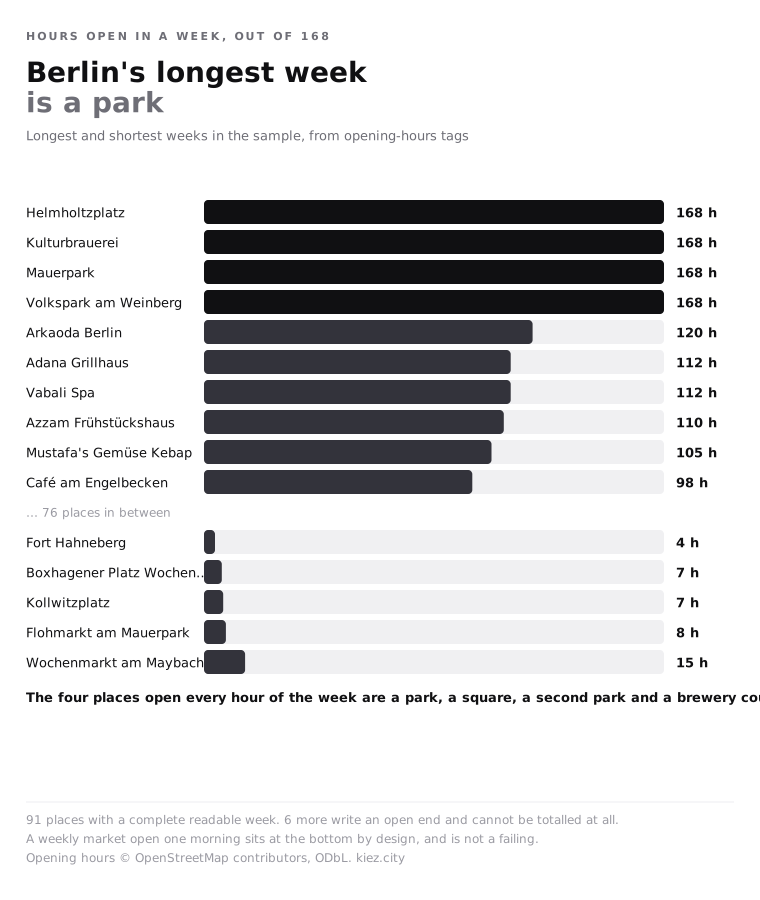
Hours open in a week, out of 168. Full size.
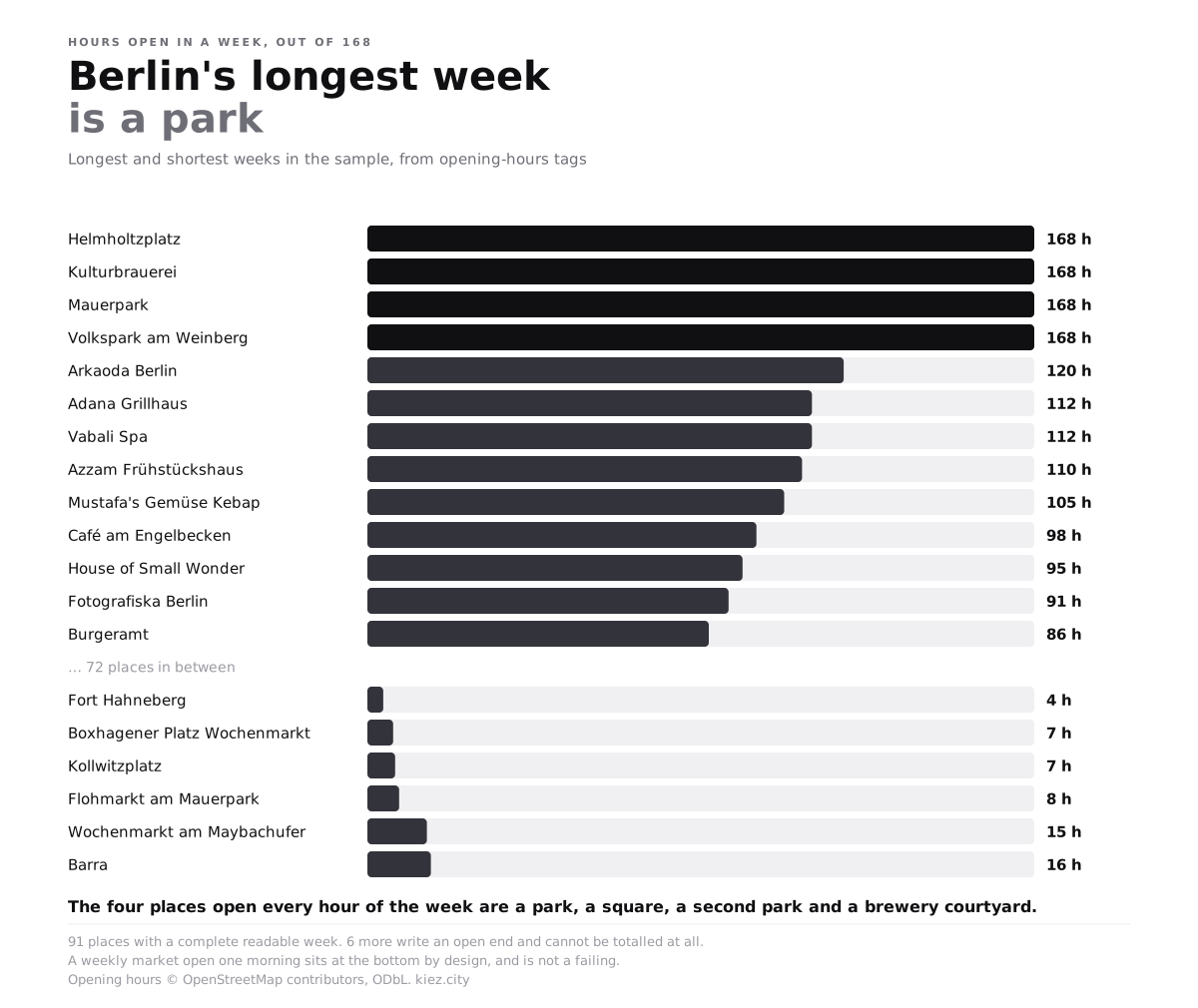
Four places tie at the top with a perfect 168, and all four are the pieces of public ground above. The first place with a roof comes in at 120 hours. Below that the fall is steady: 112, 112, 110, 105.
Ninety-one places have a complete readable week. Six more write at least one span with no closing time and cannot be totalled at all, which is a reminder that this ranking is missing exactly the venues most likely to be near the top.
What would change these numbers
Better tagging, mostly. A place is in this chart because somebody wrote its hours into OpenStreetMap and somebody else checked them. That process is strongly biased towards places with a fixed schedule, which means restaurants and museums are well covered and the parts of the night that run on rumour and a door policy are not.
If you want to change the picture, the fix is not a better dataset. It is
editing the map. A club with accurate opening_hours in OpenStreetMap turns up
in this kind of chart, in transit apps, and in a dozen other places that read the
same field, and one that has none turns up nowhere.
Every hours value here was read on 6 August 2026 and comes from OpenStreetMap under the ODbL. Where a second source disagrees with the map about a place, both readings are kept and the disagreement is shown on the day it matters, rather than being resolved into a single confident wrong answer.